
Craters of the Moon National Monument and Preserve
United States · Americas
關於Craters of the Moon National Monument and Preserve
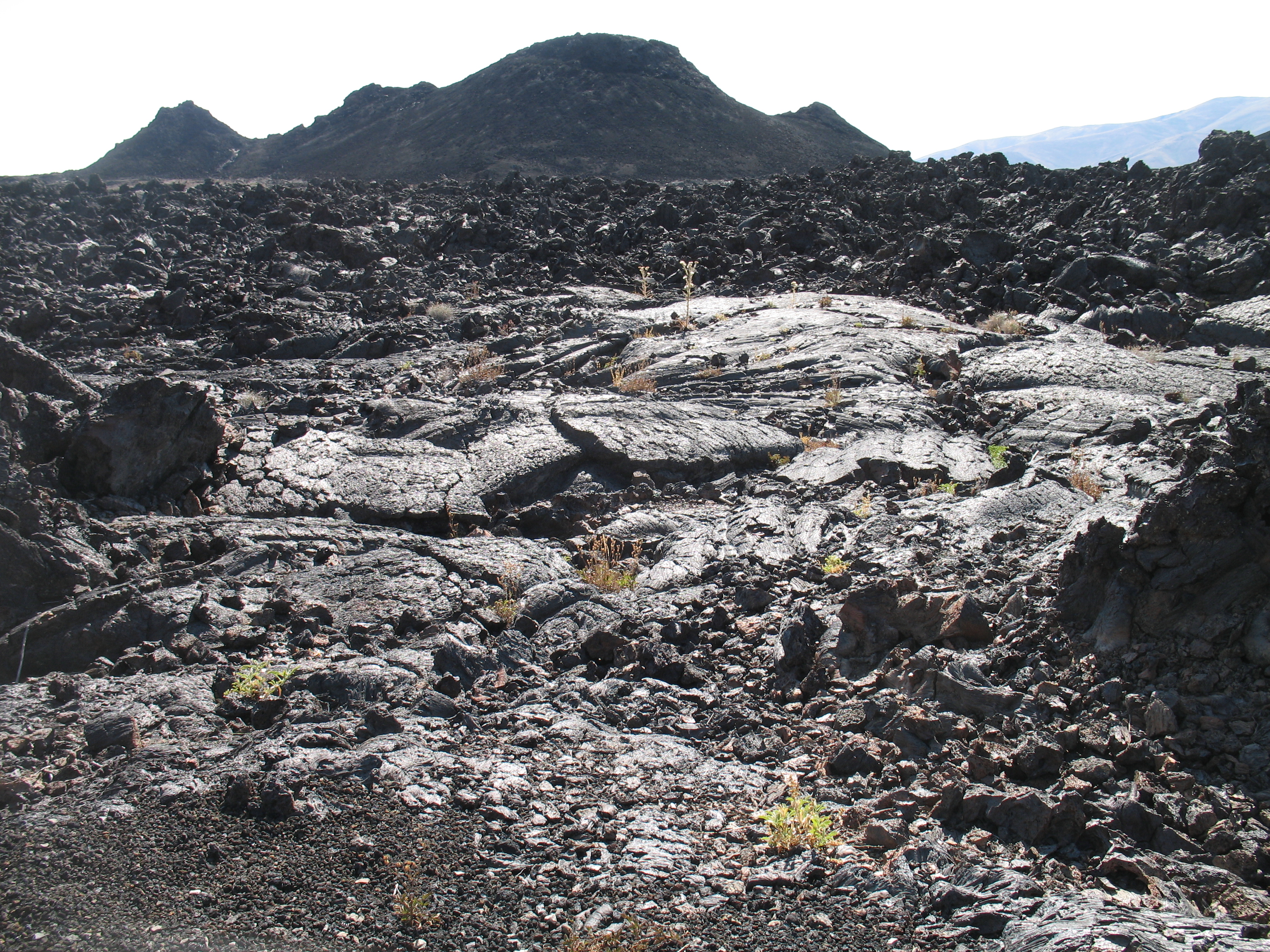
Craters of the Moon National Monument and Preserve is a United States national monument in the Snake River Plain of Central Idaho. The park was created to protect a vast landscape of lava flows with scattered islands of cinder cones and sagebrush. Starting 15,000 years ago, the landscape was created by molten lava flows. While the park's landscape varies tremendously from the celestial body after which it was named, it was nevertheless visited in 1969 by Apollo 14 astronauts Alan Shepard, Edgar Mitchell, Joe Engle and Eugene Cernan who explored the lava landscape in order to learn the basics of volcanic geology in preparation for future trips to the moon.
Craters of the Moon National Monument and Preserve旅遊指南
城市概覽
History The park was created in 1924 by President Calvin Coolidge, who at the time described it as "a weird and scenic landscape peculiar to itself". The area was designated the Craters of the Moon Wilderness in 1970 by Congress, the first such designation within the National Park Service; it was also certified as a Dark Sky Park by DarkSky International.
Landscape Over the past 15,000 years, lava eruptions created a rugged but scenic landscape that has forced animals and plants to adapt, and people to endure, detour, or ponder. Located on the Snake River Plain, a volcanic terrain spanning southern Idaho, the Monument and Preserve encompasses the Great Rift volcanic rift zone. In places, this plain is 60 miles wide, with basalt lava deposits over 10,000 feet deep in some locations. Eruptions 2,000 years ago at the Craters of the Moon and the Wapi lava fields are among the most recent volcanic activity to take place anywhere in this immense geographic area. Features visible today include an isolated landscape filled with such features as cinder cones, spatter cones, lava tubes, and several types of lava flows.
Flora and fauna
Despite the seemingly barren landscape the park supports a rich diversity of life including more than 660 types of plants and over 280 animal species. While searing lava flows that initially destroyed everything in their path today protect the last refuges of intact sagebrush steppe communities on the Snake River Plain. These islands of vegetation, known as kipukas, provide important examples of what is "natural". Animals seen most frequently in the park are birds and some rodents. The changing weather and seasons play a large role in determining which animals are active at any given time. Most desert animals are nocturnal, or mainly active at night, and include woodrats (also called packrats), skunks, foxes, bobcats, mountain lions, bats, nighthawks, owls, and most other small desert rodents. Animals that are most active at dawn a
如何抵達
By car From Arco, it is about 20 miles (32 km) southwest on US 20/26/93 to the entrance to the monument, about a 30-minute drive. From Carey, it is about 25 miles (40 km) north on US 20/26/93 to the entrance to the monument, about a 35-minute drive.
By air The closest commercial airport is Idaho Falls Regional Airport (IDA IATA) is just northwest of Idaho Falls. It has limited service from Salt Lake City and Minneapolis/Saint Paul on Delta Connection, Denver Airport on United Express, Las Vegas on Allegiant Air, and Boise and Bozeman on Horizon Air. IDA is located 87 miles (140 km) east of the monument, about a 2-hour drive. The nearest major airport is Boise Airport (BOI IATA), 3201 Airport Way, is serviced by several airlines, including United, Delta, Alaska/Horizon and Southwest. BOI is 178 miles (286 km) west of the monument, about a 3½-hour drive.
當地交通
The Monument and Preserve remains open all year, although winter snows prevent automobile access around the Loop Drive from mid-November through mid-April. During the open period the road remains open at all hours. The paved, 7-mile Loop Road connects all of the park's major attractions. Most visitors drive from parking lot to parking lot, but the road is relatively flat and ideal for bicycling. All major sites include short- to medium-length trails, two of which are wheelchair-accessible.
體驗活動
The 7-mile-long (11 km) Loop Road passed many of the key locations in the monument, providing access to trailheads leading to a closer look at the landscape. Listed below are some of the stops along the road.
North Crater Flow. This lava flow is the youngest in the park. A short ¼-mile (0.4-km) trail leads past lava monoliths. A longer 3.5-mile (5.6 km) trail leads to the North Crater, source of this flow. This trail eventually connects to the Spatter cones stop on the driving tour. Devils Orchard. Fragments of rock rise out of a field of black cinder like flowers, giving rise to the name of this area. A ½-mile (0.8-km) accessible trail leads through the bizarre landscape. Inferno Cone. A steep ½-mile (0.8-km) trail leads to the top of this cinder cone which provides a panoramic view of the lava fields, including one of world's largest cinder cones, Big Cinder Butte. Spatter cones. A short accessible trail leads through the spatter cones, miniature vents that create tiny volcanic cones. Tree Molds. This stop is a trailhead for multiple trails. The 2-mile (3-km) Tree Molds Trail leads past imprints of trees in the lava. The 1.8-mile (2.9-km) Broken-Top Trail circles a cinder cone. The longer, 4-mile (6.4-km) Wilderness Trail visits lava trees, upright molds of trees destroyed by lava flow. Caves. A 1.75-mile (3-km) trail leads to lava tube caves. The caves are open to explore with a permit from the visitor center but you will need to bring a light source.
購物
Craters of the Moon Natural History Association Bookstore (in the Visitor Center), ☏ +1 208 527-1360. Labor Day-Memorial Day (off-season): Daily 8AM-4:30PM, closed on Federal holidays during off-season; Memorial Day-Labor Day (Summer): Daily - 8AM-6PM.
美食
The only food in the Monument is from vending machines at the Visitors Center. The town of Arco, 30 minutes to the east, is the closest settlement with restaurants and a grocery store.
飲品與夜生活
The only drinks in the Monument are from vending machines at the visitors' center.
住宿
Lodging There is no lodging in the monument. The nearest lodging is in the town of Arco 18 miles outside of the park.
Camping 1 Lava Flow Campground (Located on the Loop Road 0.25 miles past the visitor center.). 51 sites. Lava Flow Campground is accessible by automobile from May through November. Facilities: water, restrooms, charcoal grills, picnic tables. No RV hookups or showers. From November through May, water and other services are limited or unavailable. $15 per night (2020 rates). (updated Jul 2020) 2 Group Campground. Nestled behind Sunset Cinder Cone about 0.75 miles up a gravel road on the north side of U.S. Highway 20/26/93. Check-in at the Visitor Center in order to gain access to this gated area. Open May through October (closure dates may vary depending upon snow conditions). Facilities: picnic tables, drinking water, fire grate, vault restroom. $30 Group Campground Fee (2020 rates). (updated Jul 2020)
Backcountry Free permits for backcountry camping are available from the visitor center. Although there are no fixed campsites, most of the few backcountry campers at Craters of the Moon hike in to the Echo Crater area on the Wilderness Trail (leaving from the Tree Molds parking lot). The volcanic crater is large enough to accommodate several tents with reasonable privacy, and is close to several cinder cones, volcanic craters, and tree molds. Be aware: water is not available in the backcountry and, on sunny days, the black cinder ground will heat up quickly. Due to the hot, dry climate, hikers may consume water more quickly than expected--bring at least 1
城市概覽改寫自 Wikipedia,旅遊指南來自Wikivoyage (CC BY-SA)。照片來自 Wikimedia Commons.