
Cocora Valley
Colombia · Americas
關於Cocora Valley
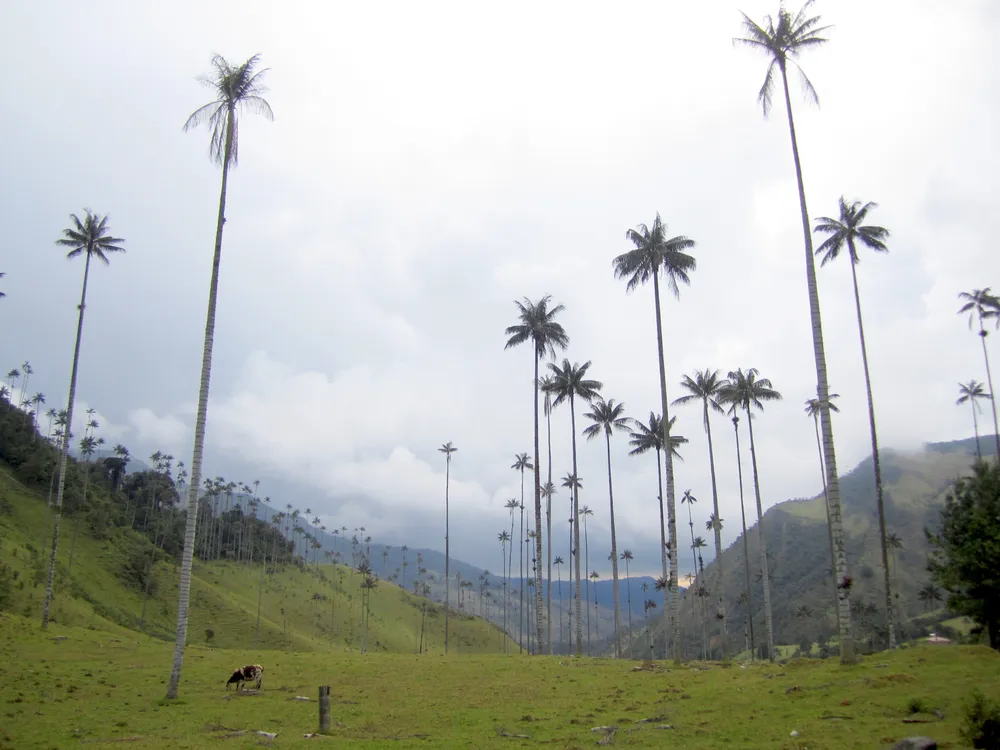
Valle de Cocora is a protected area in Quindío near the eco-tourist/backpacker haven of Salento, known for its surreal, striking landscapes pegged with the slender, towering Colombian national symbol, the wax palm.
Cocora Valley旅遊指南
城市概覽
History The area was designated a national natural area by the Colombian government in 1985 in response to the imminent threat of extinction of the Ceroxylon quindiuense, the Quindío wax palm. The palms were brought to the verge of extinction in part owing to their utility in making wax candles and building materials for farmers, but most of all because they were traditionally cut down annually for fronds on Palm Sunday. The park remains to this day one of the few places in the world that you can find these immense trees which, while quite rare, are no longer under imminent threat. You can find some other ones in botanical gardens, such as the San Francisco Botanical Garden in San Francisco, California.
Landscape Valle de Cocora is a natural cloud forest, although the area around the hamlet of Cocora is used for pasture. The topography is decidedly Andean, with the valley following a river flanked by steep mountain foothills.
Flora and fauna The Wax Palm, the Colombian national tree, is obviously the main attraction. It is the tallest palm in the world, growing up to 60 meters, while retaining the girth of any old palm, making for a very slender giant, an immense pole topped with a little crown of palm fronds. Their wide root systems make for an odd visual: palms shooting up hundreds of feet into the sky, all widely but evenly spaced apart, as if planted purposefully. Other local flora of note include the Pino Romerón, puyas, frailejónes, and encenillos. More rare flora are to be found when you ascend past Estrella de Agua and enter the Páramo alpine tundra in Los Nevados National Park. The fauna is perhaps less appreciated by visitors, and in fairness, the more charismatic mammals make themselves pretty scarce: endangered mountain tapirs, spectacled bears, sloths, and mountain lions. Of birds the most noticeable is surely the big Andean condor, but the most notable is the yellow-eared parrot, which nests in the hollow trunks of the wax palms themselves. Th
如何抵達
There are supposed to be jeeps going from the central plaza of Salento at 7:30AM, 8:30AM, 9:30AM and 11:30AM, which then leave on a return trip from the park at 5PM. But there really isn't a set schedule. There are a bunch of jeeps (chipetas) in the plaza in the morning, and they leave if they can find enough people to fill them, and the situation is exactly the same on the way back. The price (one-way) per person is COP$5,900 (Oct 2023). Valle de Cocora is a popular place for Colombian tourists year-round, so this process is never too hard. To ensure you have enough time at the park, though, you'll want to be at the plaza no later than 9AM (8AM or earlier would be ideal). If you don't mind paying extra, you can always buy up all the seats in the jeep, and it will leave whenever you want it to. Expect the ride to be a little over 30 minutes. The road to Cocora is rough, but can be done in a sedan, which you'll have to leave parked on the side of the road (along with the jeeps). As of November 2024, it is entirely paved up to the park entrance and in good condition. There are several parqueaderos at the entrance charging a flat rate of COP$10,000 to park. The road from Salento starts at the east end of Kra 2 (at the intersection with Calle 1). Once you arrive at Cocora, you'll see the wooden gate entrance.
當地交通
The park/valley is small enough to cover the trails in one day on foot, although horseback riding is also an option (see below). Bear in mind that parts of the trail are more than two miles above sea level, so if you are not acclimated to the Andes, the hike will be hard.
必看景點
Valle de Cocora isn't exactly long on sights—the attraction is the environment, and of course the wax palms. The one exception might be the hummingbird sanctuary:
Acaime. Acaime is a hummingbird sanctuary and a strategically placed coffeeshop. It costs COP$5,000 for entry and a hot beverage plus fresh cheese, which is very worthwhile, if only for some hot chocolate, tea, or coffee and some chit chat with other travellers, all happy to sit down after trekking around the jungle. There are hummingbird feeders right by the sitting area, so you can watch various varieties of hummingbirds flit about while you sip. COP$5,000. (updated Aug 2018) As of 2022 the price to see the two hummingbirds is 15.000 COP and is not worth the money nor the detour.
體驗活動
There's really only one activity here: to explore and photograph the valley. Most visitors do so on foot: The most popular six-or-so hour loop trail is to head from the 1 wooden entrance gate along the trail to the right, to 2 Acaime, before returning via 3 Finca la Montaña. You'll go for a while through fairly flat pasture (always slightly uphill) along a trail thoroughly chewed up by horses (wear shoes that can get very muddy), before eventually entering the cloud forest, and trekking alongside the Quindío River. Keep aiming for Acaime and ignore other signposted side trails. From Acaime start heading back and take the uphill side trail signposted to Finca La Montaña (note: this sign no longer seems to be there, but the junction is clear; after crossing the river for the umpteenth time there is a large sign to Acaime to the right, and a good track to the left, which leads to the Finca), a farm on a very steep hill, with some lovely views and an insanely angry dog who hopefully will never break free of his short iron chain. Have a seat, meet the farmer's cute little daughter, who will bring you a guestbook to sign. Climbing just a bit more, you will get high enough for the surrounds to transform into a pine forest, before a fairly steep descent into the most scenic part of the valley, with absolutely great opportunities for photography. The standard estimates of time are 2.5 hours to Acaime, 1 hour to Finca La Montaña, and then 1.5 hours back to Cocora, although if you are fit and not stopping a lot, you can shorten that down to a four hour circuit. Note that local guides recommend climbing the route in the reverse direction as that posted above: the ascent is much easier from Cocora to the Finca la Montaña, and the descent would be through the forest, which is the steepest part of the route. On the above loop trail, you'll see signs for 4 Estrella de Agua, a two hour muddy slog uphill past Acaime, which is a little farm by a small alpine lake where hikers camp on
購物
Alas, they have yet to capitalize on the potential wax palm tchotchke and t-shirt market. For all the tourists, this place is not touristy.
美食
Within the valley, there is only the cafe at Acaime, which is cheap and very welcome after trekking, but also extremely basic—most visitors get their calories just via the oh so Colombian hot chocolate and fresh cheese combo. Just outside the park, though, there are some down-to-earth rural cafes serving the local trucha specialty (trout), and that's definitely a nice way to spend time at the end of the hike, if you aren't ready to speed back to Salento. Savvy travelers will bring some arepas or other str
城市概覽改寫自 Wikipedia,旅遊指南來自Wikivoyage (CC BY-SA)。照片來自 Wikimedia Commons.