
Chhatrapati Shivaji Maharaj Terminus
India · Asia
關於Chhatrapati Shivaji Maharaj Terminus
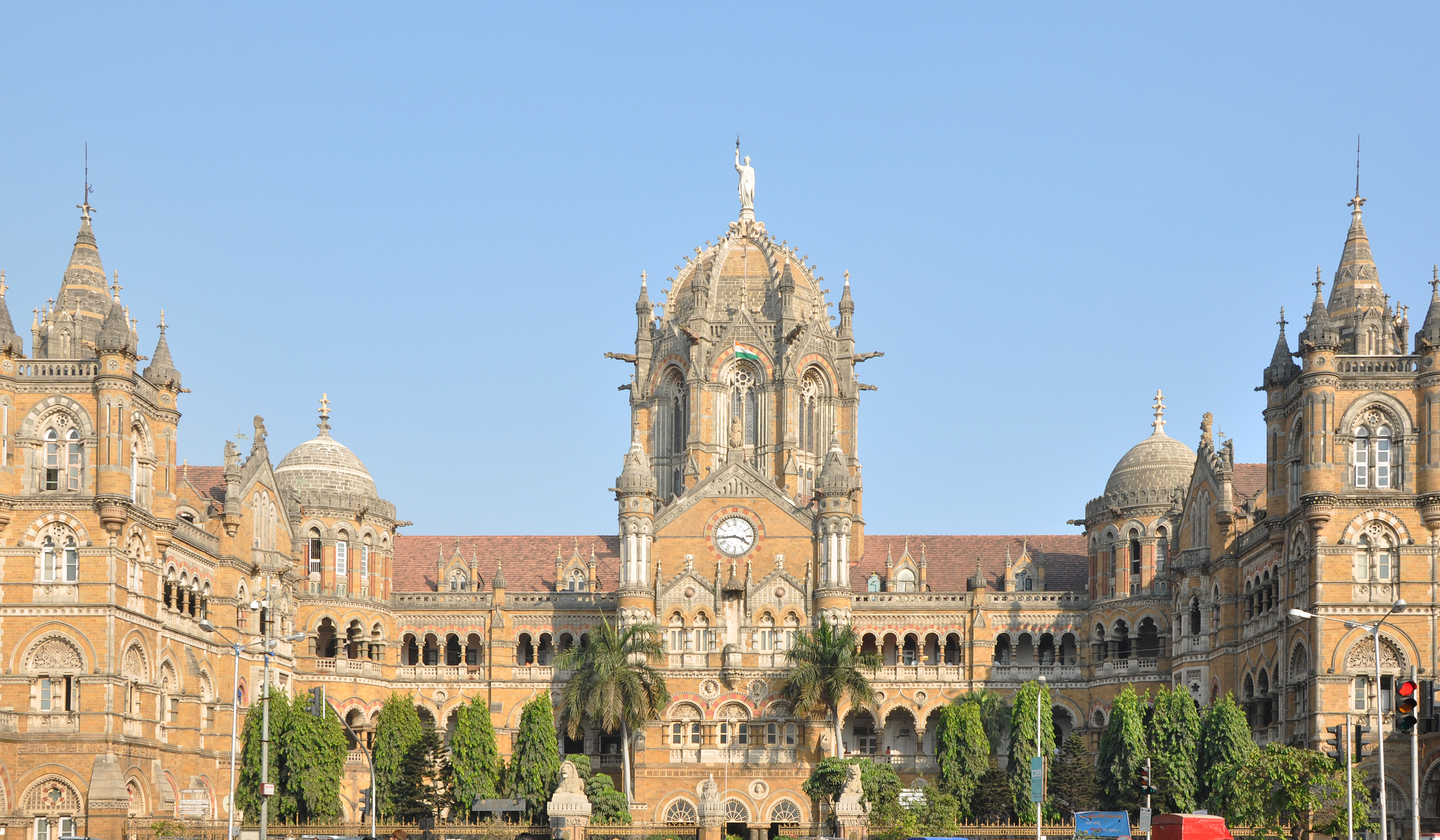
Chhatrapati Shivaji Maharaj Terminus (Marathi: छत्रपती शिवाजी महाराज टर्मिनस Chhatrapatī Shivājī Mahārāj Ṭarminas, IR code: CSMT (mainline) or ST (suburban)), formerly Victoria Terminus (VT), is one of the main disembarking stations for suburban and long-distance trains in Mumbai, India, and a UNESCO World Heritage Site.
Chhatrapati Shivaji Maharaj Terminus旅遊指南
城市概覽
History CSMT was established in 1853 as Bori Bunder Station. The first commercial railway service began on 16 April 1853 at 3:35PM on its first run between Bori Bunder and Thane. Bori Bunder was a small station, with a single pair of tracks and wooden buildings. In 1877, the original station was demolished to make way for Victoria Terminus (VT) in 1888, taking ten years to build. The building was designed in the High Victorian Gothic style of architecture. It exhibits a fusion of influences from Victorian Italianate Gothic Revival architecture and traditional Indian architecture. The skyline, turrets, pointed arches, and eccentric ground plan is close to traditional Indian palace architecture. VT became the headquarters of the Great Indian Peninsular Railway (GIPR), which eventually became the Central Railway (CR). In 1996, when Bombay became Mumbai, VT was also renamed to Chhatrapati Shivaji Terminus (CST) to honour the first Maratha emperor. It was renamed again in 2016 to add "Maharaj", thus becoming Chhatrapati Shivaji Maharaj Terminus (CSMT). Despite this, the station continues to be known by the abbreviations "VT" and "CST" alongside "CSMT".
Architecture The wood carving, tiles, ornamental iron and brass railings, grills for the ticket offices, the balustrades for the grand staircases and other ornaments were the work of students at the Sir Jamsetjee Jeejebhoy School of Art. The station stands as an example of 19th-century railway architectural marvels for its advanced structural and technical solutions. The station was constructed using a high level of engineering both in terms of railway engineering and civil engineering. It is one of the first and is considered one of the finest products of the use of industrial revolution technology merged with the revival of the Gothic Revival style in India. The centrally domed office structure has a 150 m (490 ft) long platform connected to a 500 m (1,600 ft) long train shed, and its outline provides the skeleton p
住宿
Namah Sleeping Pods, PF 14, ☏ +91 90048 97645. (updated Jul 2026)
城市概覽改寫自 Wikipedia,旅遊指南來自Wikivoyage (CC BY-SA)。照片來自 Wikimedia Commons.