
Cheongsong County
South Korea · Asia
關於Cheongsong County
Cheongsong County is in the central-eastern part of North Gyeongsang, South Korea. Part of its land is rugged and mountainous, owing to the influence of the Taebaek Mountains and other ranges. It shares borders with Yeongdeok and Pohang to the east, and with cities like Andong and Yecheon toward the west and south. Almost the entire county is part of the Cheongsong UNESCO Global Geopark. More than 80% of the county is covered in forests, giving it some of the cleanest air in Korea. The area is renowned for its apples, natural mineral springs, and traditional festivals celebrating local agricultural and cultural heritage. With less summer heat and severe winter cold due to its basin and mountainous geography, Cheongsong is ideal for those seeking beautiful scenery and the tranquility of rural Korea.
Cheongsong County旅遊指南
城市概覽
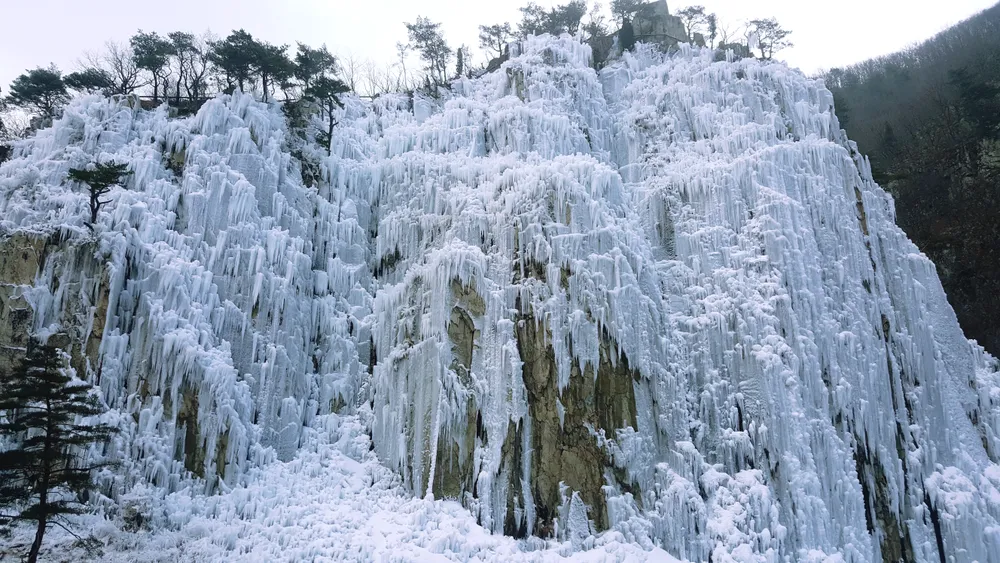
Cheongsong is known for premium apples and high-quality red pepper, both of which are major agricultural products. It also has many natural attractions such as Juwangsan National Park, Jusanji Pond, the Ice Valley, and Dalki Mineral Springs.Traditional culture remains strong—local handicrafts like Cheongsong pottery and traditional paper (hanji) are preserved, and historical legacies such as remnants of the Cheongsong Dohobu and sites related to the So-hyun Royal lineage are part of the county’s heritage.
The name “Cheongsong (靑松)” originated in 1424 when two former administrative areas, Jinbo County and Songsaeng County, were merged. The name combines 'Cheong' (blue/green) and 'Song' (pine), referencing the green pines of the area.
History Cheongsong is a place with a unique history, evolving from ancient times to the modern era. Here is a simplified history for foreigners to easily understand. Cheongsong’s history is especially significant during the Joseon Dynasty. King Sejong, one of Korea’s most respected kings, married Queen Soheon, who was from Cheongsong. Because of this special connection, Cheongsong was elevated in status from a simple county to a more important administrative district, a Dohobu'. This royal connection gave Cheongsong special treatment and prestige for centuries. Later, in the early 20th century, the Japanese colonial government reorganized the administrative map, and Cheongsong absorbed neighboring areas to become the county we know today. In short, Cheongsong is not just a beautiful natural area; it's a place that was once highly regarded by a king because it was his queen's hometown. This unique royal history makes Cheongsong a special part of Korea's heritage.
Climate Cheongsong County, located in the inland region of Gyeongsangbuk-do, has a typical continental climate, which means there's a significant temperature difference between summer and winter, unlike coastal areas. Summers are hot and humid, with most of the annual pre
如何抵達
By bus The main gateway to Cheongsong is the Cheongsong Intercity Bus Terminal, located in Cheongsong-eup. There are direct intercity buses to Cheongsong from Dong Seoul Bus Terminal (via Andong and Jinbo), Daegu (Dongdaegu and Bukbu terminals), Busan, Andong, and nearby cities. Buses run multiple times daily to Daegu—typically 1.5 to 2 hours—and also connect to Andong and Yeongcheon.
1 Cheongsong Intercity Bus Terminal (청송버스터미널), 184, Jungang-ro, Cheongsong-eup. It is mainly used by local residents and tourists. Although relatively small, the terminal operates intercity bus routes to several cities including Andong , Daegu , Yeongdeok , Pohang , and Seoul. The terminal is equipped with taxi stands and convenient facilities. (updated Nov 2025)
By car Cheongsong is easily accessed by car, especially since the construction of the SeoSan-Yeongdeok Expressway and improved tunnels. Drive time from Seoul is 3 to 3.5 hours. Well-maintained roads link Cheongsong with Andong, Yeongdeok, Pohang, and other nearby districts, though some mountainous roads may be winding.
By train Cheongsong does not have its own train station. The nearest major train stops are Andong and Yeongcheon Station. Visitors can take the KTX or regular trains to these cities from Seoul, Busan, or Daegu, then continue to Cheongsong by bus.
2 Andong Station (안동역), 122-16 Gyeongdongro, Andong-si, North Gyeongsang. From Andong Station, you need to take a local bus or taxi to Cheongsong, as there is no direct train station in Cheongsong. (updated Nov 2025) 3 Yeongcheon Station (영천역), 94-10 Geumwan-ro, Yeongcheon-si, North Gyeongsang. From Yeongcheon Station, you need to take a local bus or taxi to Cheongsong, as there is no direct train station in Cheongsong. (updated Nov 2025)
當地交通
By car Due to the mountainous terrain, many roads in Cheongsong County are winding and require careful driving. However, using a private car remains the most flexible way for visitors to reach natural sites and major attractions within Cheongsong. Recent improvements to the road network and new tunnels have made access to Cheongsong-eup (the main town) much easier for travelers arriving from outside the region, and overall transportation convenience has greatly increased for both tourists and residents.
By bus Cheongsong County is the first region in South Korea to operate rural buses free of charge for all passengers. Since January 1, 2023, anyone—including tourists and residents—can use any of the 63 bus routes in the county without paying a fare. Buses run from 6:30 AM to 8:40 PM, offering convenient and flexible transportation throughout the area for over 1,000 passengers per day.
By taxi Tourists can easily use regular taxis or call taxis via mobile apps (such as Kakao T or Macaron Taxi) or by phone reservation. Taxis are readily available at the intercity bus terminal, town centers, or near popular tourist attractions. Fares are calculated based on distance, and both cash and card payments are accepted.
By bicycle Cycling in Cheongsong is a pleasant experience, thanks to scenic country roads and gentle slopes suited for all skill levels. The area is connected to regional bike paths, and you can enjoy views of lush valleys and clean rivers as you ride. Rental bikes are available near popular tourist spots, making it easy for visitors to explore at their own pace. Quiet village roads and riverside routes provide a safe and enjoyable journey for both leisure cyclists and families.
By walk Well-marked trails and walking paths allow easy access to natural attractions and cultural sites. Short hiking routes, such as the trail from Jeolgol Exploration Support Center to Daemoon Bridge (about 5 km), are popular and safe for families or solo travel
必看景點
1 Cheongsong Eoreumgol (청송 얼음골), 1 Naeryong-ri, Juwangsan-myeon, ☏ +82 54-870-6111. Open all year round. Cheongsong Eoreumgol Valley is a gorge located on Juwangsan Mountain in Cheongsong. It is known for its warm winters and cool breezes in the summer, creating a mystical atmosphere. In May 2017, it was recognized for its geological value and certified as a UNESCO Global Geopark. During the summer, when the temperature exceeds 32 °C, ice forms in the valley, melting when the temperature drops below 32 °C. The area boasts impressive rock formations and stunning landscapes, attracting many tourists with its springs, and artificial falls. (updated Sep 2025) 2 Cheongsong Yasong Art Museum (군립청송야송미술관), 5162 Gyeongdong-ro, Jinbo-myeon, ☏ +82 54-872-6536. Daily 10:00-18:00. It opened in 2005, was created by remodeling the former Sinchon Elementary School. With modern exhibition halls of various sizes and an art library, the museum offers a unique cultural space to experience creativity and contemporary art in Cheongsong. Free. (updated Sep 2025) 3 Cheongsong County Seokgatdol Museum (청송군수석꽃돌박물관), 842, Haui-ri, Juwangsan-myeon, ☏ +82 54-873-2400. Daily 09:30 - 17:00 (hours may vary by season). This is a place exhi
城市概覽改寫自 Wikipedia,旅遊指南來自Wikivoyage (CC BY-SA)。照片來自 Wikimedia Commons.