
Chūō
Japan · Asia
關於Chūō
Chuo (中央) is a central ward in Tokyo. It has been the historical commercial heart of Tokyo since the Edo period, and to this day, is filled with offices, banks, and other institutions that drive the Japanese economy.
Chūō旅遊指南
城市概覽
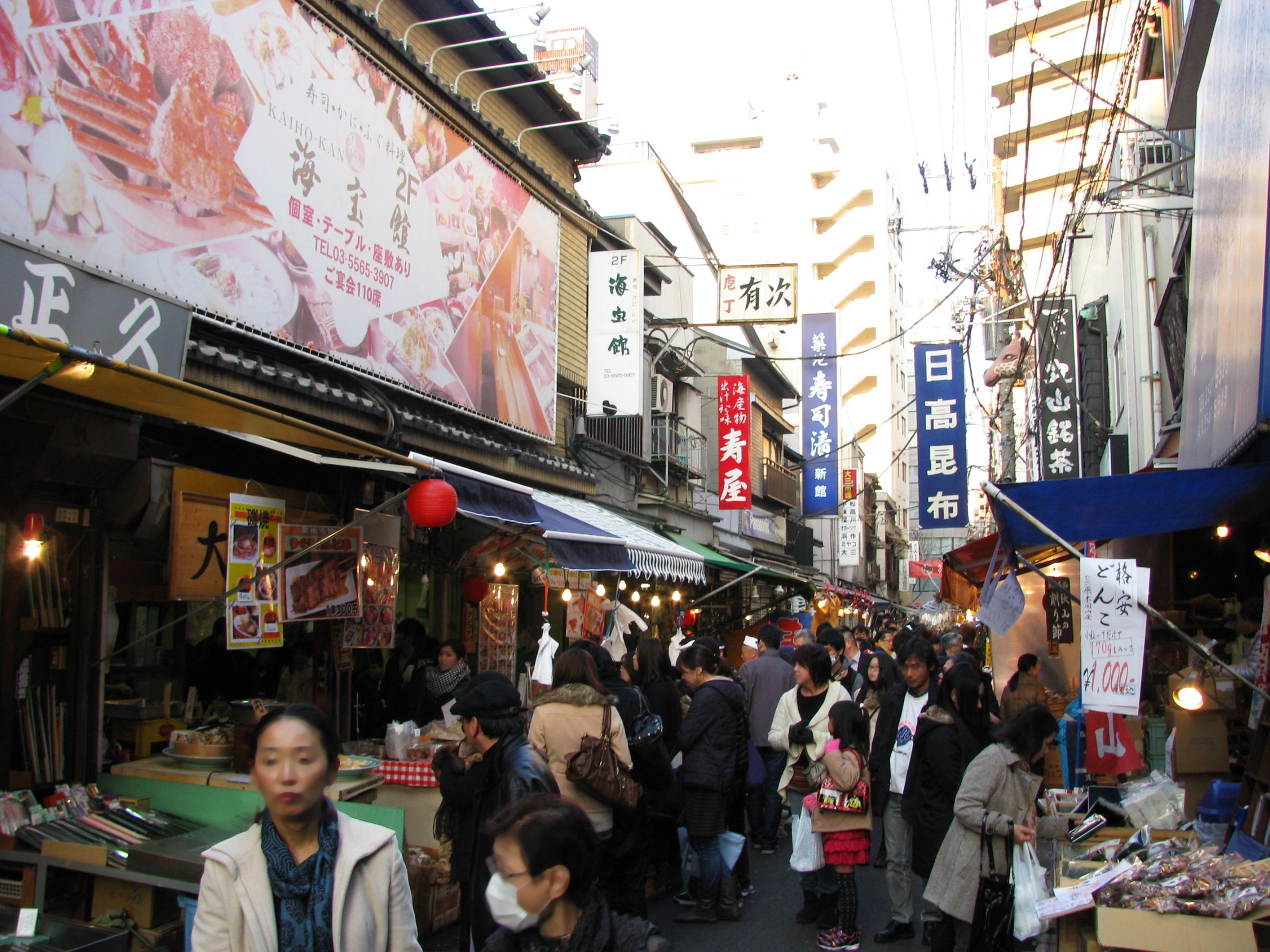
While the name literally means "Center", this ward loses out in prestige (if only very slightly) to neighboring Chiyoda, home to the Emperor among others. Ginza, which is located in Chuo ward and is covered in a separate article, is generally reckoned to have the most expensive real estate on earth and there are plenty of bright lights. Chuo ward was the former home to the world’s largest fish market, Tsukiji, which processed an unparalleled volume and variety of seafood, in addition to vegetables and other products. While the Inner Market has permanently closed and operations moved to Toyosu, the hundreds of stalls in the Outer Market remain open to the public.
Tourist Information Sites The local tourist association has a Japanese-only guide site. Multilingual local information from the ward government.
如何抵達
The western edge of Chuo starts on the Yaesu (east) side of Tokyo Station, and if your legs are feeling up to it, you can get pretty much anywhere worth seeing within a 45-minute walk. Otherwise, take the subway.
必看景點
1 Tsukiji Outer Market (築地場外市場 Tsukiji jōgai shijō), 5-2-1 Tsukiji (Tsukijishijo Station, Toei Oedo Subway), ☏ +81 3-3542-1111. Varies by shop, but typically M-Sa 09:00-14:00, closed holidays and most Wednesdays. For more than 80 years, Tsukiji was the world's largest wholesale fish market. Although the wholesale operations (including the famous tuna auctions) closed in 2018 and moved to Toyosu, the outer market remains in place and continues to welcome the public with stalls selling fresh fish, sushi, produce and kitchen supplies. Suggested plans for the former inner market site include a sport stadium or an anime/manga themed entertainment facility. Free. 2 Tsukiji Hongwanji (築地本願寺), 3-15-1 Tsukiji (accessible from Tsukiji (Hibiya Line) or Tsukiji-shijō (Ōedo Line)), ☏ +81 3-3541-1131. A Jōdo Shinshū temple just a few blocks away from the fish market, worth seeing because of its unique, South Asian-inspired architecture. Buddhist services are held in English on Saturday evenings. 3 Nihonbashi Bridge (日本橋). Nihonbashi means Japan bridge. It is the most famous bridge in Japan and one of the very few historic bridges remaining in Tokyo. The current stone and steel bridge was built in 1911. It is the point from which all distances are measured to the capital. Since 1964 it is unfortunately overshadowed by a massive expressway, blocking much of the view. (updated Mar 2018) 4 Tokyo Stock Exchange (東京証券取引所 Tokyo shoken torihikijo), 2-1 Nihombashi Kabutocho (accessible from Kayabacho (Tozai and Hibiya Lines) or Nihombashi (Asakusa Line)), ☏ +81 3-3665-1881. Tokyo's stock exchange, while one of the largest in the world by capitalization, is now entirely automated, and the tiny building it resides in is mostly for show, featuring a small museum, exhibition hall, and broadcasting facilities. English tours can be booked in advance. (updated Dec 2024) 5 Hama-rikyū Gardens (浜離宮恩賜庭園), 1-1 Hama-rikyū Teien (7 min walk from Shiodome Station on Toei Oedo or Yurikamome Lines, or 1
體驗活動
Tsukiji Outer Market. The Outer Market of the Tsukiji Fish Market contain a bewildering array of shops. One shop carries nothing but dried seaweed, another knives, another is just bowls of all shapes and sizes! After you've had your sushi breakfast, wander around these shops and pick up something interesting. Walk around the Tsukiji area to find the remaining 1920s houses that are among the rare ones to have survived World War II. The World Monuments Fund warns against their ongoing destruction. 1 Ramen Cooking Tokyo, 2-13-5 Tsukuda, Chuo-ku (5 min walk from Tsukishima Station), ☏ +1-213-214-3338. 10:00–13:00, 14:00–17:00. English-only small-group cooking class (maximum 8 participants) where visitors prepare ramen and sushi in a 3-hour session, with a sake pairing of three varieties. Located in Tsukishima, a short walk from the monja-yaki district. ¥20,000.
購物
The Ginza, covered in its own article, is one of the world's most famous (and most expensive) shopping districts.
Sho-Chu Authority, 18-17 Koami-cho, Chuo. M W F 10:00-19:00. This humbly named shop stocks over 3,000 varieties of the Japanese tipples shochu and awamori.
美食
Budget
Past Tsukiji on Harumi-dori is the island neighborhood of Tsukishima (月島, "Moon Island"), known mainly for its many restaurants serving monja-yaki (もんじゃ焼き). This dish is popular in Eastern Japan (Kantō) and is available throughout Tokyo, but is a particular specialty of Tsukishima. Monja-yaki is like the okonomiyaki of Western Japan (Kansai), but the dough is much more runny and the ingredients are finely chopped, leading to what looks like a puddle of vomit. Just remember the essentials: you form the shredded cabbage into a ring on the griddle and pour the leftover liquid in the middle, and you use the tiny spatulas to press the mixed batter onto the griddle until it sizzles, then eat it right off the spatula. (Most shop staff will be more than happy to assist.) Sounds strange, doesn't it? It is. To get here, take the Yurakucho/O-Edo Line to Tsukishima station, and you'll find "Monja Town" [1] aka Nishinaka-dori (西仲通り) extending out from near exit 7, with no less than 70 restaurants crammed into a couple of city blocks.
1 Oshio Honten (おしお本店), Tsukishima 3-17-10, ☏ +81 3-3531-7423. The original shop of one of the better-known chains here, with half a dozen restaurants. Try the mentaiko-shiso monja with cod roe and perilla, which tastes oh so much better than it looks. Monjas from ¥1000 up (serves two). The northern section of Tsukishima is named Tsukudajima (佃島), and is the origin of tsukudani (佃煮), a way of preserving food by simmering it in a sticky soy and sugar sauce. Tsukudani is still available throughout Japan, but is less common than before, having fallen out of style in most of Japan; it is still commonly available here. Seafood, seaweed (konbu) and various vegetables are the most common ingredients, but if you're looking for something more interesting, try inago (いなご) tsukudani, made from locusts!
Mid-range Try a sushi breakfast at Tsukiji, primarily for the experience. The fish is guaranteed to be as fresh as possible and the prices, while
飲品與夜生活
The Ginza has a large array of drinking establishments, most of which are also extremely expensive. This is where the Japanese horror stories of US$100 for a beer originate from. Choose carefully, or head elsewhere.
住宿
Budget 1 Sumisho Hotel (住庄ほてる), 9-14 Nihonbashi Kobunacho, ☏ +81 3-3661-4603, fax: +81 3-3661-4639. A ryokan-style hotel , Japanese style rooms and big traditional bath available. Singles start at ¥7,000, doubles at ¥11,000.
Mid-range 2 Hotel Kazusaya (かずさや), 4-7-15 Nihombashi-Honcho (near Shin-Nihombashi Station, Sobu Line), ☏ +81 3-3241-1045, [email protected]. Singles ¥8,000-9,000, doubles ¥14,700. 3 Tokyu Stay Nihombashi (東急ステイ日本橋), 4-7-9 Nihombashi-Honcho, ☏ +81 3-3231-0109, fax: +81 3-3231-0112. Slight discounts are offered for extended stays. Part of the Tokyu Stay chain, these hotels are
城市概覽改寫自 Wikipedia,旅遊指南來自Wikivoyage (CC BY-SA)。照片來自 Wikimedia Commons.