
Central India
India · Asia
關於Central India
Central India is the only region of India completely surrounded by other regions, having neither a border with another country nor a coastline. Despite this, it offers everything from rolling hills, dramatic waterfalls and abundant wildlife, to classical architecture, tribal heritage and modern steel industry.
Central India旅遊指南
城市概覽
History and culture
Central India’s history stretches back tens of thousands of years, and its cultural identity is shaped by a rare blend of ancient civilisations, tribal traditions, sacred cities and medieval kingdoms. The region’s earliest human presence is visible in the extraordinary rock shelters of Bhimbetka, where vivid prehistoric paintings reveal scenes of hunting, dancing, and daily life dating back over 30,000 years. By the 3rd century BCE, the area had become an important part of the Maurya Empire, with Emperor Ashoka leeaving behind stupas, monasteries and inscriptions—most famously at Sanchi, one of the world’s oldest and best‑preserved Buddhist sites. Cities like Ujjain emerged as major centres of astronomy, trade, and learning, mentioned in classical Sanskrit literature and long considered among the holiest cities in India. During the medieval period, Central India saw the rise of powerful regional dynasties such as the Paramaras, Chandelas and Kalachuris, who built fortified capitals, temples, and water systems across the landscape. Their legacy survives in the form of hilltop forts, intricately carved shrines, and planned medieval towns. Later, the region became a frontier between the Mughal Empire, and various Rajput and Maratha powers, giving rise to a distinctive architectural and cultural mix—seen in cities like Gwalior, Mandu, and Orchha, where palaces, mosques, and temples coexist within dramatic natural settings. Chhattisgarh adds another dimension to Central India’s identity through its deep and continuous Adivasi (tribal) heritage. Large parts of the state are home to Gond, Baiga, Halba, and other indigenous communities whose traditions—ranging from metalwork and terracotta art to dance forms like the Gaur and Karma—remain central to the region’s cultural life. Their festivals, music, and craft traditions have shaped the social fabric of the forests and plateaus for centuries, creating a cultural landscape that feels distinct from the
如何抵達
By plane Bhopal (BHO IATA) and Indore (IDR IATA) are the only airports in Central India with limited international flights, with a plenty of domestic connectivity. Raipur (RPR IATA) is the main airport of Chhattisgarh.
必看景點
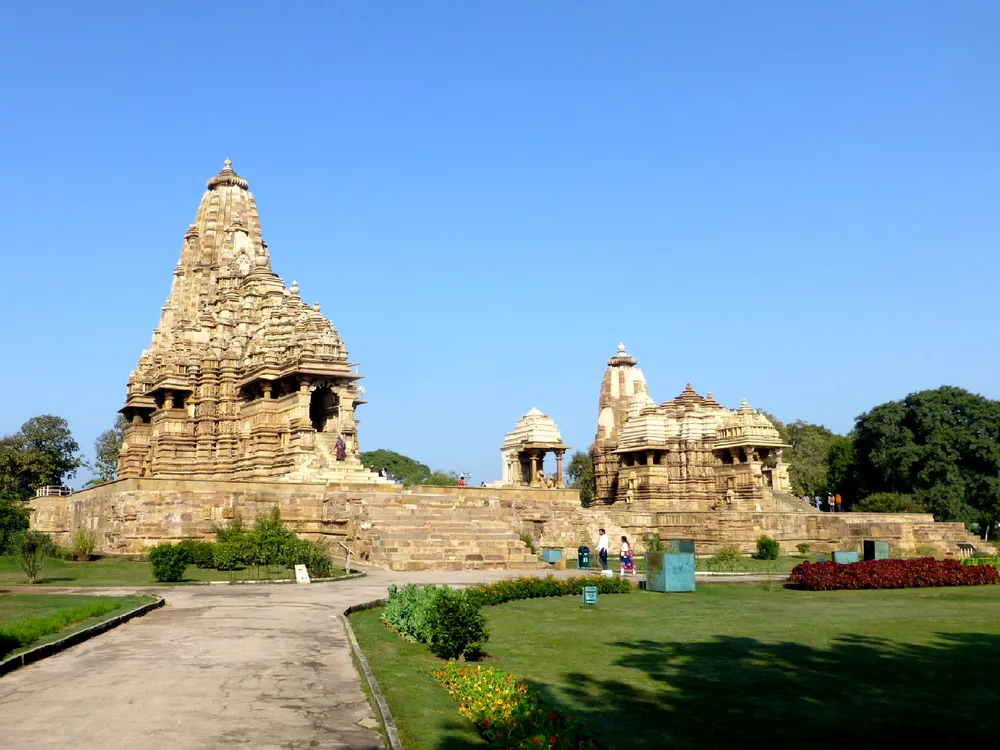
Central India offers much to see in the form of its rich heritage. 1 Sanchi Stupa. Sunrise to sunset. One of the world’s oldest Buddhist monuments, built under Ashoka. Free to Indian nationals. (Bangladesh, Nepal, Bhutan, Sri Lanka, Pakistan, Maldives and Afghanistan) and BIMSTEC Countries (Bangladesh, Nepal, Bhutan, Sri Lanka, Thailand and Myanmar) – Rs. 40 per head. Other Foreign Visitor: Total Rs.600/-. (updated May 2026) 2 Bhimbetka Rock Shelters. UNESCO‑listed prehistoric cave art dating back over 30,000 years. (updated May 2026) 3 Khajuraho Temples. Chandela‑era sandstone temples known for intricate sculpture. (updated May 2026) 4 Gwalior Fort. A massive hilltop fort with palaces, temples, and Mughal history. (updated May 2026) 5 Orchha Fort Complex. Medieval palaces and cenotaphs along the Betwa River. (updated May 2026) 6 Amarkantak. Source of the Narmada and Son rivers, sacred pilgrimage site. (updated May 2026) 7 Chitrakote Falls. India’s widest waterfall, often called the “Niagara of India.” (updated May 2026) 8 Sirpur. Archaeological site with Buddhist, Hindu, and Jain ruins. (updated May 2026)
美食
Central India’s food culture is hearty, earthy, and deeply tied to the agricultural and forest landscapes of Madhya Pradesh and Chhattisgarh. In the western and central parts of MP, breakfast often begins with Poha–Jalebi, a comforting combination of turmeric‑tinted flattened rice and crisp, syrupy spirals that locals swear by. Rural areas lean toward simple wheat‑based meals, but cities like Indore and Bhopal have developed rich street‑food traditions, where vendors serve everything from stuffed kachoris to spicy chaats. One of the region’s most iconic dishes is Dal Bafla, a close cousin of Rajasthan’s dal baati, featuring wheat dumplings baked or boiled before being drenched in ghee and eaten with a thick, flavourful lentil stew. In the eastern forests of Chhattisgarh, the cuisine shifts toward tribal and forest‑influenced flavours. Meals often include Chila (a savoury rice‑flour pancake), Faraa (steamed rice dumplings), and leafy‑green preparations that reflect the region’s agricultural rhythms. The tribal communities of Bastar contribute unique dishes made from forest produce, including mushrooms, bamboo shoots, and seasonal herbs. Staples like Red Ant Chutney—a traditional Adivasi preparation—are part of local culture, though travellers may encounter them more in village settings than in city restaurants. Across both states, thalis remain a reliable way to sample local flavours, typically featuring lentils, vegetables, roti or rice, and a small sweet. Sweets themselves are a point of pride: Mawa Bati, Khoya Jalebi, and Gajar Halwa appear frequently in MP, while Chhattisgarh’s tribal regions favour jaggery‑based treats tied to harvest festivals. Whether you’re wandering Indore’s bustling food lanes or sharing a home‑cooked meal in a forest village, Central India’s cuisine offers a warm, grounded introduction to the region’s culture.
飲品與夜生活
Central India offers a wide range of refreshing, often traditional drinks that reflect the region’s climate and agricultural roots. In the hotter parts of Madhya Pradesh, travellers will frequently come across Shikanji, a spiced lemonade that’s especially popular in cities like Indore and Bhopal. Street vendors also serve Sugarcane Juice, pressed fresh and mixed with a hint of lime or ginger, which is a favourite during the long summer months. In rural areas, Mattha—a lightly spiced buttermilk—is a common way to cool down after a meal, and it’s often flavoured with cumin or coriander. Chhattisgarh adds its own distinctive flavours, many of them tied to forest communities and local produce. Mahua Drink exists in both fermented and non‑fermented forms; the non‑fermented version is a sweet, floral syrup made from mahua flowers and is widely enjoyed during festivals. Another regional favourite is Kosra Sherbet, made from a local fruit and known for its tangy, refreshing taste. In the Bastar region, travellers may encounter traditional herbal infusions prepared from forest leaves and roots, which are valued for their cooling properties in the humid climate. Across both states, tea remains a daily ritual. Small roadside stalls serve Chai in tiny clay cups, often brewed strong and sweet. In larger cities, cafés offer more modern takes, including masala chai, ginger tea, and milk‑based cold coffees. For something more indulgent, Indore is known for its Shikanji Milkshake and Cold Cocoa, both of which have become local favourites.
城市概覽改寫自 Wikipedia,旅遊指南來自Wikivoyage (CC BY-SA)。照片來自 Wikimedia Commons.