
Bronzeville
United States · Americas
關於Bronzeville
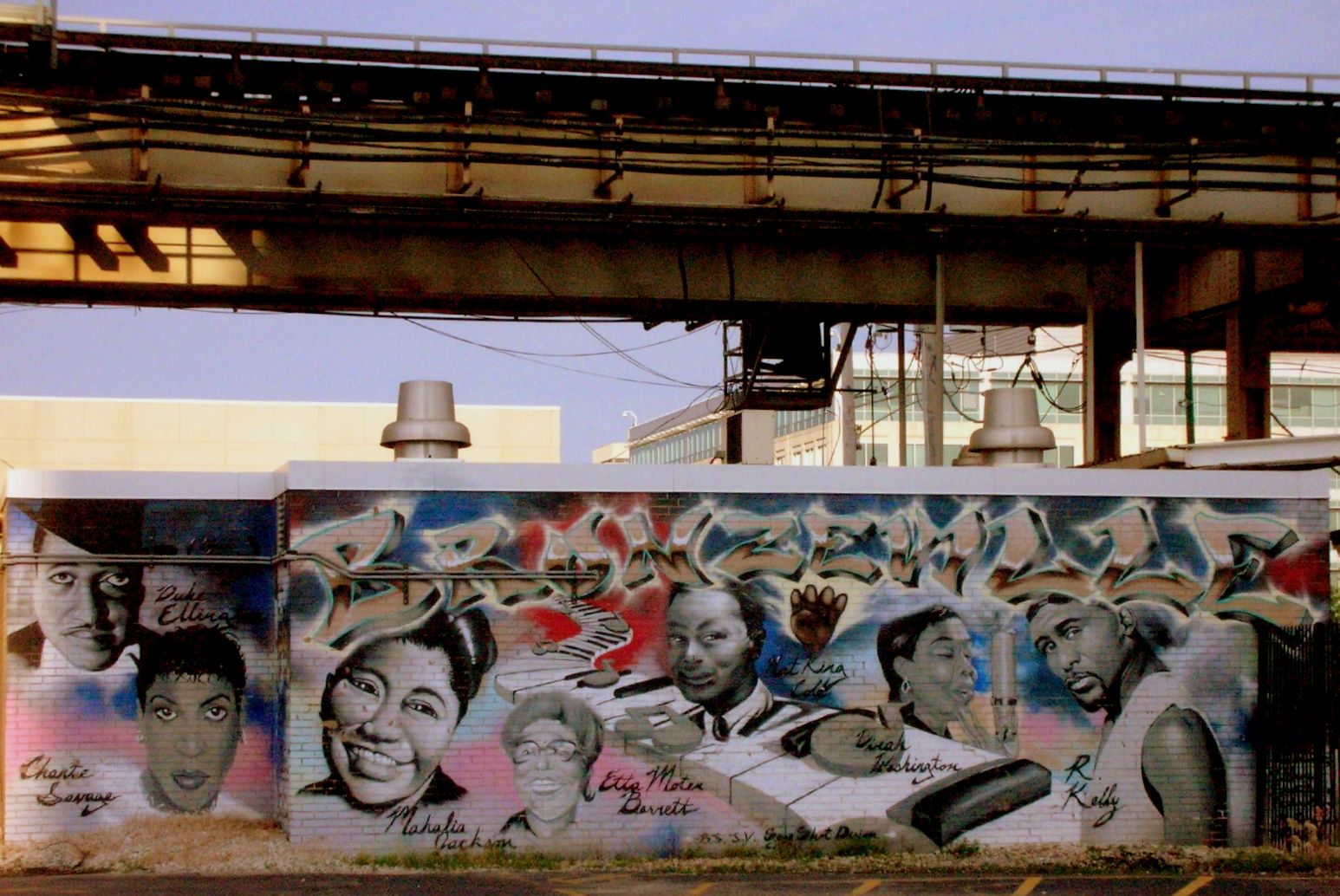
Bronzeville, the Black Metropolis, is a mecca of African-American History on Chicago's South Side, just miles south of downtown. Gwendolyn Brooks published poetry in the Chicago Defender, Andrew Rube Foster created Negro League Baseball, and Louis Armstrong kept his trumpet singing at the Sunset Cafe to keep Al Capone off his back. Long in disrepair, the neighborhood is coming back, with new residents refurbishing historic homes, and with new dining and nightlife scenes beginning to take root.
Bronzeville旅遊指南
城市概覽
Bronzeville was the site of Chicago's version of the Harlem Renaissance, and was home to many famous African-Americans, including Gwendolyn Brooks, Richard Wright, Louis Armstrong, Bessie Coleman, Ida B Wells, Andrew Foster, and many more. The neighborhood was from the 1920s to the 1940s one of the premiere centers of African-American culture and was fairly affluent and middle class. The Great Depression hit the area hard, bankrupting black-owned businesses, but the neighborhood's worst enemy proved to be the neglectful and segregationist city government. Because black Chicagoans were restricted (unofficially) from renting and buying property outside of the "Black Belt," rents were actually higher in the district's run-down, ill-maintained buildings, owned by white absentee landlords, than in the adjacent, wealthy, white neighborhoods. In 1941, the city built the infamous and gigantic Ida B Wells housing projects in Bronzeville, which produced devastating and unintended results. Because of segregation, many low-income African-Americans were unable to find housing anywhere else and the projects quickly became overcrowded, while crime and urban blight expanded throughout the neighborhood. Today, the neighborhood is seeing major community-driven revitalization efforts, mostly by wealthy and entrepreneurial African-Americans who value the neighborhood's historic importance. Historic clubs are reopening, and there are a handful of nice coffee shops and restaurants. More so than the present, however, the principal attraction remains the neighborhood's rich history. As a rule, the revitalization efforts have not extended below 47th Street or west of the Dan Ryan Expressway into the Washington Park and Fuller Park neighborhoods, which remain very blighted, with an extraordinary amount of vacant lots and the highest violent crime levels in the city. Unfortunately, this means that 47th Street, which has some major draws, can be a little edgy after dark. But don't worry about
如何抵達
By train The best way to reach Bronzeville by public transport is definitely the CTA Green Line, which runs along State and Indiana, with key stops at 35-Bronzeville-IIT, 43rd St, 47th St (Jackson), and Garfield (Jackson). The Red Line runs along Bronzeville's western border by the Dan Ryan Espressway — a bit further away from most Bronzeville attractions, but convenient nonetheless. The Metra Main Line has a stop at 27th St, which is near the "Walk of Fame" and Michael Reese Hospital, but not near much else.
By bus Many CTA bus lines travel throughout Bronzeville. A few key routes are the #4 and #3, which run north-south along Michigan Ave and Martin Luther King Jr Dr respectively and will take you to Bronzeville from the Loop. The #55 Garfield route is useful for travel between Bronzeville and Midway Airport, in the Southwest Side.
By car Bronzeville is one of the few neighborhoods close to the Chicago center that is actually best seen by car. Free on-street parking is in ample supply pretty much everywhere throughout the neighborhood — owing to the relatively low population density of the district. There are many exits leading into Bronzeville from the Dan Ryan Expressway, although you might enjoy the ride better if you take a more northerly exit (like 35th or 31st Streets) and then explore the area from Martin Luther King Drive — some of the areas further south around the expressway are a bit run down. If coming from the Loop, the best way is probably to just head south on Martin Luther King Drive, which serves as the main drag for most of the district.
必看景點
Black Metropolis landmarks The following buildings are the city-designated, remaining landmarks from Bronzeville's golden age, from the "Black Metropolis" city within a city where blacks could find employment serving their own community.
1 Chicago Bee Building, 3647-3655 S State St, ☏ +1-312-747-6872. M-Th 9AM-8PM, F Sa 9AM-5PM. The home of the Chicago Bee newspaper, which was founded by Anthony Overton to promote black businesses and issues. The art deco building has an elegant terra cotta façade and today houses the Chicago Bee Branch Library. Free. 2 Chicago Defender Building, 3435 S Indiana Ave. Built in 1899 as a synagogue, this building housed the Chicago Defender (the nation's foremost African-American newspaper through World War I) from 1920-1960. The Chicago Defender published works by Langston Hughes and Gwendolyn Brooks, and is largely credited for starting the Great Migration in its exhortations to southern blacks to move to the North for greater economic opportunities and freedom. The building is oddly vacant and neglected and may be available for sale. 3 Eighth Regiment Armory (Bronzeville Military Academy), 3533 S Giles Ave, ☏ +1-773-534-9750. This was the first armory for an African-American regiment, serving the "Fighting 8th," which fought in the Spanish-American War and served with distinction in World War I. After years of disuse, this grandiose building has been restored and now houses the nation's first public college-prep military school, which is unfortunately not open for visitors. 4 Overton Hygienic Building, 3619-27 S State St. Built by the wildly successful African-American entrepreneur Anthony Overton to house the headquarters of his nation-wide cosmetics franchise. The building housed several of his other businesses, including Victory Life Insurance Company and Douglass National Bank, America's first national African-American bank. The building is now owned by the Mid-South Planning and Development Commission. Just across the stre
體驗活動
The one activity offering in which Bronzeville excels is anything involving a big open field — If you are in the center of Washington Park tossing a football around or just lying in the grass, the big city feels miles away.
1 31st St Beach (Margaret Burroughs Beach), 3100 S Lake Shore Dr. Summers: 9AM-9:30PM. While small, 31st St Beach is one of the nicest places for a swim on the South Side. It's family-friendly, never crowded, and always has stunning views of the Chicago skyline. 2 Fuller Park, 331 E 45th St, ☏ +1-312-747-6144. Some very serious basketball players hit the pavement here on weekends and the courts are worth a visit to watch the local players, but keep in mind that the park is in one of Chicago's roughest areas. 3 Harold Washington Cultural Center, 4701 S Martin Luther King Jr Dr, ☏ +1-773-373-1900. This major Bronzeville landmark is a performance venue showing movies, live jazz, blues, and more. (updated Mar 2019) 4 Washington Park. A very big park designed by Frederick Law Olmsted. The park has big open fields, which host numerous festivals, sporting events, and performances throughout the summer. Be sure to check out the DuSable Museum of African-American History and the "Fountain of Time" sculpture.
購物
Bronzeville has been an excellent spot to shop for African-American-related books and art. There are other similar galleries and bookstores throughout the South Side, b
城市概覽改寫自 Wikipedia,旅遊指南來自Wikivoyage (CC BY-SA)。照片來自 Wikimedia Commons.