
Bir, Himachal Pradesh
India · Asia
關於Bir, Himachal Pradesh
Bir is a town in the eastern end of the Kangra Valley in Himachal Pradesh with a friendly, relaxed Indian population and a large Tibetan (Khampa) community. It is home to several educational institutions, monasteries, and nonprofit organizations (NGOs). It is becoming a popular off-the-beaten-path destination for meditation courses, volunteering, and ecotourism.
Bir, Himachal Pradesh旅遊指南
城市概覽
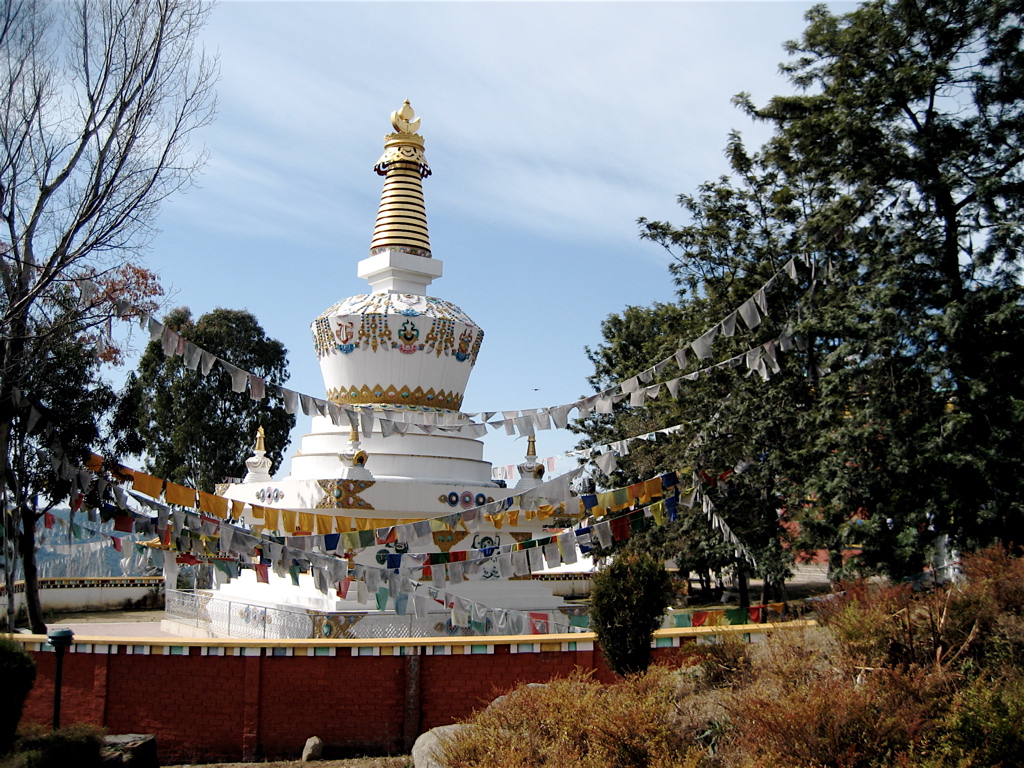
Bir is a small mountain town in northern Himachal Pradesh with a large, well-established Tibetan community. Set against the backdrop of the Dhauladhar Range of the Indian Himalayas, the town is picturesque, although the rubbish-strewn roadsides and waterways of the Tibetan Colony (down the hill from Bir proper) are an unfortunate contrast to its golden roofed temples, and to the greenery of Upper Bir (Bir Proper) and the surrounding villages. The Tibetan Colony is actually in the village of Chowgan. Bir proper, sometimes referred to as "Indian Bir" or "Upper Bir", is the small market and surrounding farming community located in the foothills above Chowgan. The founding of Bir: Local accounts indicate that Bir was first settled by immigrants from Bengal around 1600 CE. These families settled in Bir proper. Other groups started migrating to the area in the early 20th century. The Tibetan Colony: In 1966 the third Neten Chokling (1928–1973), an incarnate lama of the Nyingma lineage of Tibetan Buddhism, brought his family and a small entourage to Bir. With the help of foreign aid Neten Chokling purchased over 200 acres of land and established a Tibetan settlement where 300 Tibetan families were given land to build houses. At this time Chokling Rinpoche also started building a new Neten monastery in Bir, and disciples who had followed him into India formed its first sangha. When the third Chokling Rinpoche passed away in 1973, his eldest son, Orgyen Tobgyal Rinpoche (b 1951), assumed responsibility for completing his father’s vision. The fourth Neten Chokling incarnation was born in 1973 in Bhutan and brought to Bir at a young age where the family of the third Chokling took him under their wings. In 2004 full responsibility for Pema Ewam Chögar Gyurme Ling Monastery was passed to the fourth Neten Chokling. The monastery, now a place of study and practice for over 120 monks, served as the setting for Khyentse Norbu’s 1999 feature film The Cup. Other Tibetan Buddhist monas
如何抵達
By plane Kangra Airport (DHM IATA) at Gaggal near Kangra is the nearest airport to Bir, roughly a two-hour journey from Bir. Daily flights from Delhi.
By bus Bir is about four hours from Dharamsala and McLeod Ganj.
From Dharamsala: There are direct buses to Bir Road/Upper Bir leaving at 6AM and 2PM from Lower Dharamsala. Or you can take a bus to Palampur, then to Baijnath. From Baijnath there are buses every half hour to Upper Bir – for Bir Colony ask them to drop you at Chowgan crossroads, then you have to walk about 1 km. Or get off at Bir Road junction and get a taxi (₹50–60). From Delhi: From the Inter-state Bus Terminal (ISBT), take a bus to either Baijnath or Bir Road – the latter is closer, but many buses only go as far as Baijnath. There are two overnight buses leaving Delhi. Both depart mid evening and arrive early morning. Lakshmi Holidays also operate a Volvo A/C semi-sleeper bus service from Delhi departing Majnu ka tila at 7:30PM and Karnal Bypass at 7:55PM, arriving in Bir at 7:30AM the next morning. Although the quality of the buses plying the route has improved immensely over the last few years, it is still a tiring journey and certainly not recommended for anyone who is prone to motion sickness.
By train Toy Train: There is a morning train from Pathankot to Ahju, which is 3 km from Bir. Trains from Delhi arrive at Pathankot an hour before the toy train leaves. The ride is long, tiring and often crowded but the stunning scenery more than compensates for any inconveniences. Express: Overnight train from Delhi. Alight at Pathankot (around 9 to 10 hours). Taxi to Bir costs around ₹3,000 for the four-hour journey. More expensive than the bus, but a definite option for those prone to motion sickness.
By taxi This is the most convenient way of getting to Bir from Pathankot (4 hours, ₹3,000) or Dharamsala (2 hours, ₹1000–1300). As it can be difficult to pick up a taxi in Pathankot willing to bring passengers to Bir, it is best to request your
當地交通
Taxis are usually available in the Upper Bir bus stand and in the main intersection of the Tibetan colony. Buses ply the main north–south Bir Road fairly regularly, connecting the Bir Road turnoff from the NH20 (the highway) to Upper Bir. The closest bus stop for the Tibetan Colony is at Chowgan Chowk, on Bir Road about a 10-minute walk east of the colony. The historical centre of Bir is in Upper Bir (Bir proper, sometimes referred to by the Tibetan community as "Indian Bir"). The Bir Tibetan Colony (often simply called "Colony" by locals) is at the west end of the village of Chowgan, about a 20-minute walk (or five-minute taxi) below Upper Bir. Sherab Ling Monastery is a 50- to 70-minute walk (or 15-minute taxi) from Chowgan, or slightly longer from Upper Bir. The village of Ghornala, a small, quiet area home to the Dharmalaya Institute (on Dhanaari Hill), Ghornala Resort, a Sikh retreat centre, and a few cottages, is about midway between Bir and Sherab Ling, and slightly to the north. From Upper Bir, it's about a one-hour walk or 15-minute taxi to Ghornala (and slightly longer from Chowgan or the Tibetan Colony).
必看景點
Chökyi Lödro College of Dialectics (formerly Dzongsar Institute). A centre for higher Buddhist philosophical study with about 600 monks in nearby Chauntra. Dharmalaya Institute. An eco-campus for compassionate living, set on a hill with breathtaking views overlooking Bir and the Kangra Valley, offering programs in sustainable living and contemplative practice, and creating green jobs for local villagers. 1 Palpung Sherab Ling. A Karma Kagyü Tibetan Buddhist Monastery located in woodlands between Bir and Baijnath, headed by the 12th Tai Situ Rinpoche and also host of frequent visits from Mingyur Rinpoche. River pools in Upper Bir. Tea gardens near the paragliding landing site.
體驗活動
Attend Buddhist-related activities at Deer Park. Paragliding – Bir is a well-known as a centre for paragliding, and the sport attracts people from all over the world. Bungee Jumping is becoming second adventurous activity after paragliding. 1 Amuzium illusion museum (near the paragliding landing site). Fun Museum with 1hr of Mind bending fun with illusions. Interactive & immersive experience. Optical and sensory illusions and augmented reality. (updated Jun 2025)
購物
Chowgan/Bir Tibetan Colony: everyday shopping Chauntra (east of Bir): basic kitchenware Jogindernagar, Baijnath, and Palaumpur: a few pharmacies, hardware stores, shops with decorative items, drugstores, shops with basic domestic appliances. For more choice in clothing and appliances and for garden nurseries go to Palampur. Upper Bir: post office, a chemist (pharmacy), and a few basic general stores
美食
Meals in local cafés and restaurants range between ₹20 and ₹200 per person (2019).
Upper Bir Bhawani Guest House, near the west end of Bir serves a wide variety of healthy and delicious food, but order in advance Four Tables - Run by an Indo-German who cooks very well. Moved a bit above the town, and likely
城市概覽改寫自 Wikipedia,旅遊指南來自Wikivoyage (CC BY-SA)。照片來自 Wikimedia Commons.