
Bintulu
Malaysia · Asia
關於Bintulu
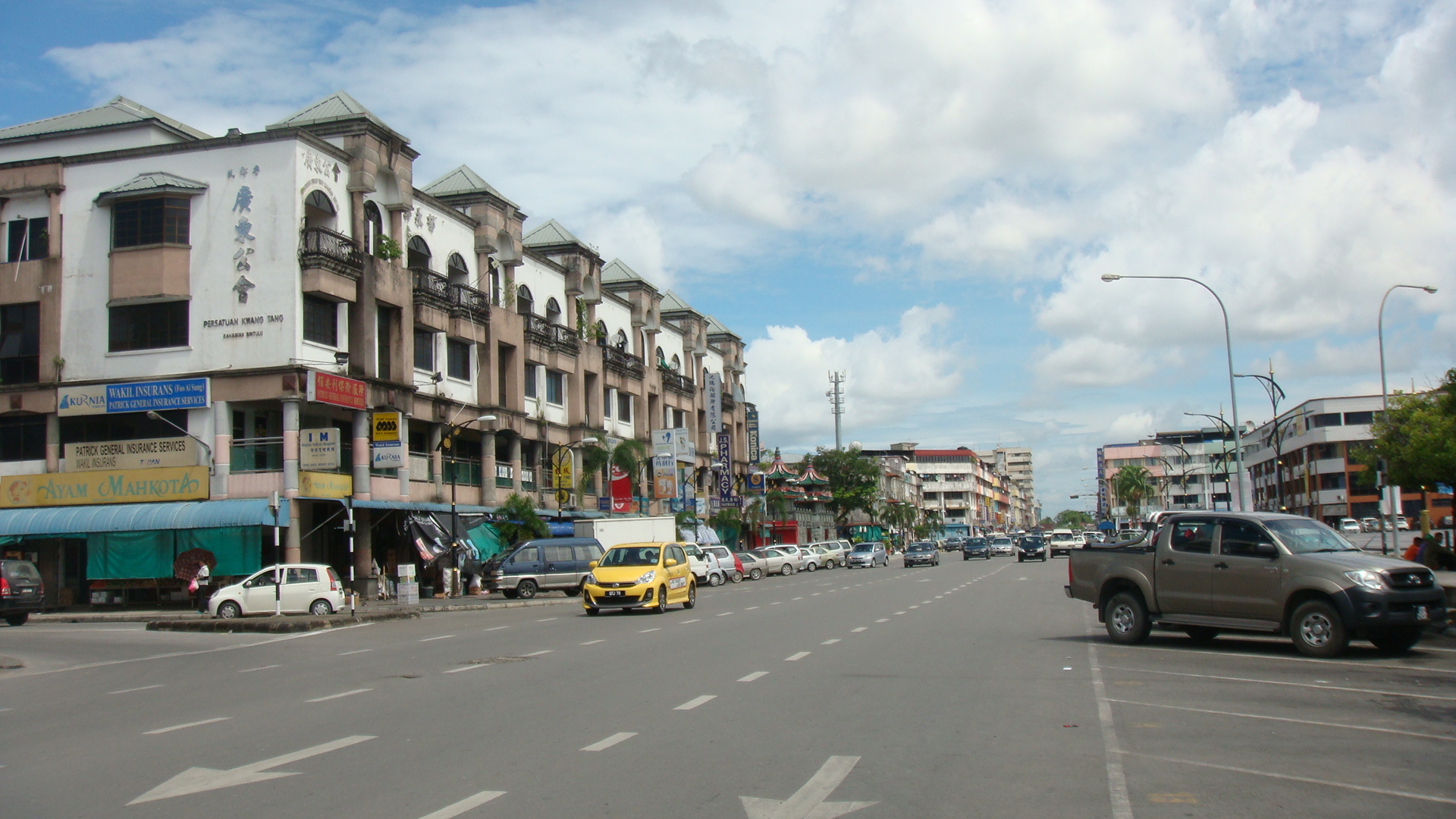
Bintulu is a part coastal, part riverine town, and the capital of Bintulu District (7,220 km2) in the Bintulu Division of Sarawak, Malaysia. It is a home to about 214,000 inhabitants (2020) in the area. Bintulu is known as a place of 'making a living'. Although it is not a main tourist destination in Sarawak, the local authorities such as Sarawak Tourism Board and Bintulu Development Authority are now putting in the effort to make Bintulu a tourist heaven.
Bintulu旅遊指南
城市概覽
Bintulu is a major industrial centre, and soon to be a capital of energy-intensive industries in Malaysia. Its port area to the east of the main town hosts the Petronas Liquified Natural Gas (LNG) Complex, which is the world's largest liquefied natural gas production facility on a single site, and also the very first Shell Middle Distillate Synthesis plant. The town is half-way between Kuching and Kota Kinabalu. Bintulu is a central gateway to tourist spots like Bakun Resort, Niah Caves (Gua Niah in Malay), Mulu National Park, Longan Bunut National Park, Lambir National Park, Sibuti Wildlife Sanctuary, Rejang Pelagus, Belaga and the Bario Highlands.
History Bintulu was once under the rule of the Brunei Sultanate. However, in 1841, Sarawak (now Kuching) was ceded to Sir James Brooke, an English adventurer who then became the First Rajah of Sarawak. In 1861, Bintulu, which was still part of Brunei, was also ceded to the Rajah and became part of Sarawak. On September 8, 1867, it became the first meeting place of the State Legislative Assembly, the Council Negeri. Following other Sarawak divisional counterparts, Bintulu has also being under the rule of Rajah Brooke family, Japan, British and now Malaysia. Bintulu began as a fishing village, with few old Chinese shophouses which have since been demolished. Following the discovery of large reserves of natural gas offshore Bintulu in 1969, a feasibility study in 1975 found a suitable site for Sarawak's first deep-water port in nearby Tanjung Kidurong. Realising the industrial potential in Bintulu, the Bintulu Development Authority (BDA) was established in 1978 by the State Government to undertake infrastructure development as well as to coordinate and promote industrial investment in the area. Bintulu has now thrived tremendously from a small fishing village with the population of mere 70,000 in the early 1970s to more than 214,000 in 2010. Bintulu has superseded Kapit and Sarikei for becoming the fourth largest urban t
如何抵達
It is approximately 624 km away from Kuching and about 215 km from either Sibu or 205 km from Miri.
By plane 1 Bintulu Airport (BTU IATA) (is 25 km away from Bintulu town). It is the main gateway for Bintulu division (which can further bring travellers to Sebauh, Tatau, Selangau, Belaga and Niah). There is daily connection from Kuala Lumpur on Malaysia Airlines, while AirAsia operates daily flights from Kuala Lumpur and Kuching, as well as an international flight from Singapore four times a week. MASWings links Bintulu with Mukah, Miri, Kota Kinabalu and Belaga. The airport. All flights outside Sarawak are considered "international", even if you're only going elsewhere in Malaysia. A restaurant is on ground floor at the lower ground and in the boarding hall (named Niah Cafe). Getting there: Bintulu town is about 20 minutes away by taxi, a fixed RM35 from the taxi coupon stand just outside arrivals. There are no buses serving the airport. You can be a little bit adventurous by walking for about 1.5 km out of the airport to the airport crossing and catch Jepak bus to Bintulu town. This is an extremely rare thing to do, so just spare some cash for a taxi to Bintulu town instead.
By boat Express boats can only link to Bintulu town from other smaller Bintulu suburban and rural areas such as Sebauh, Tubau and Labang. No express boats serving Bintulu town to other major cities and towns in Sarawak.
By bus Bintulu 2 regional express bus terminal is at Medan Jaya, not far from Farley Supermarket. All Sarawak major towns and cities like Kuching, Sibu, Miri, Mukah, Betong, Sri Aman, Sarikei, Batu Niah and Sungai Tujuh are well connected with Bintulu. Wide array of choices pamper travellers such as MTC Transport, Biaramas, Eva Transport etc. One can also expect towns which can only be served by Bintulu bus terminal such as Sg. Asap (a small town in Belaga area) and Bakun (a hydro-electric project). An international link bus such as to Brunei (via Sg. Tujuh) and Ponti
當地交通
By bus Local bus in Bintulu is served by City Public Link. The bus goes to other minor parts of the town to as far as Sungai Plan, Nyalau and Tatau/Kuala Tatau. Municipal bus can be found one stop at the Pasar Tamu Bus Terminal. The fare is RM1 under RM1 Flat Rate Bus Fare Programme. Normally, only rural people and low-income group urban and suburban people use the bus. So if you are a first-time traveler to Bintulu, be prepared to speak in a simple Bahasa Melayu, Bahasa Iban or Bahasa Melayu-Sarawak language. English is not a commonly used language by bus travellers here.
By boat Various express boats serve Bintulu which connect Bintulu to other minor towns and rural areas such as Sebauh, Tatau, Kuala Tatau, Tubau and Labang. The fare ranges from RM2 to RM80 (depend on the destination). Travelers can also rent a 'perahu' or speed boat to other minor towns for greater adventure. However, spare a lot of cash for this purpose because the rent can shoot up to RM500 per day (excluding engine oil).
On foot Bintulu old town is quite a pedestrian-friendly with lots of traffic lights served for pedestrians. However, walk to other parts of town might be a tiring one, especially to Parkcity Commercial area and Medan Jaya. A bus will cost you less than RM2.
必看景點
1 Kampung Jepak (by tambang from main town of Bintulu, or via road from Bintulu-Sibu Road using the exit to Kuala Tatau/Kampung Jepak). A traditional fishing village where majority of the inhabitants are Melanaus (Bintulu Melanaus) and Malays. It is separated from the main town of Bintulu by Sungai Kemena. You may be mesmerized by the traditional feature and lifestyle of Bintulu Melanau such as sago processing, fish drying, manufacturing of belacan (shrimps paste), cencaluk (salted shrimps), making of Terendak (Melanau Headgear) and Tutop (food cover or "tudung sarang/tudung saji"). (updated Jul 2022)
2 Council Negri Monument. Bintulu is home to the first legislative assembly meeting of Sarawak. It was held in 1867. With Charles Brooke, the second white Rajah of Sarawak in the chair, there sat 5 of his British Officers and 16 Malay and Melanau Members (Chiefs) to mark a new era in the conduct of the affairs of the state. A centenary stone commemorating the centennial of the historical meeting was erected on this site in 1967 and was further improved to include a clock tower and fountain in 1987. The monument can be found by visitors on their way to the heart of Bintulu town. (updated Jul 2022) 3 Pasar Utama & Pasar Tamu Bintulu, Jalan Main Bazaar. These markets, side by side, are the most frequently visited location in Bintulu, by rural folks and tourists. The market is divided into many parts, each for different type of traded items such as fruits, belachan (shrimp paste) & cincaluk (a solution of fermented shrimps), wet areas (for fish and seafood traders), vegetables and a basic commodities. The upper floor of Pasar Tamu is a place where local delicacies can be savoured. If you visit Bintulu,
城市概覽改寫自 Wikipedia,旅遊指南來自Wikivoyage (CC BY-SA)。照片來自 Wikimedia Commons.