
Baracoa
Cuba · Americas
關於Baracoa
Baracoa, nicknamed La Ciudad Primera, is Cuba's easternmost and oldest city. It is popular among tourists for its indigenous-inflected unique local culture, distinctive local cuisine, natural rainforest surroundings, and its chocolate.
Baracoa旅遊指南
城市概覽
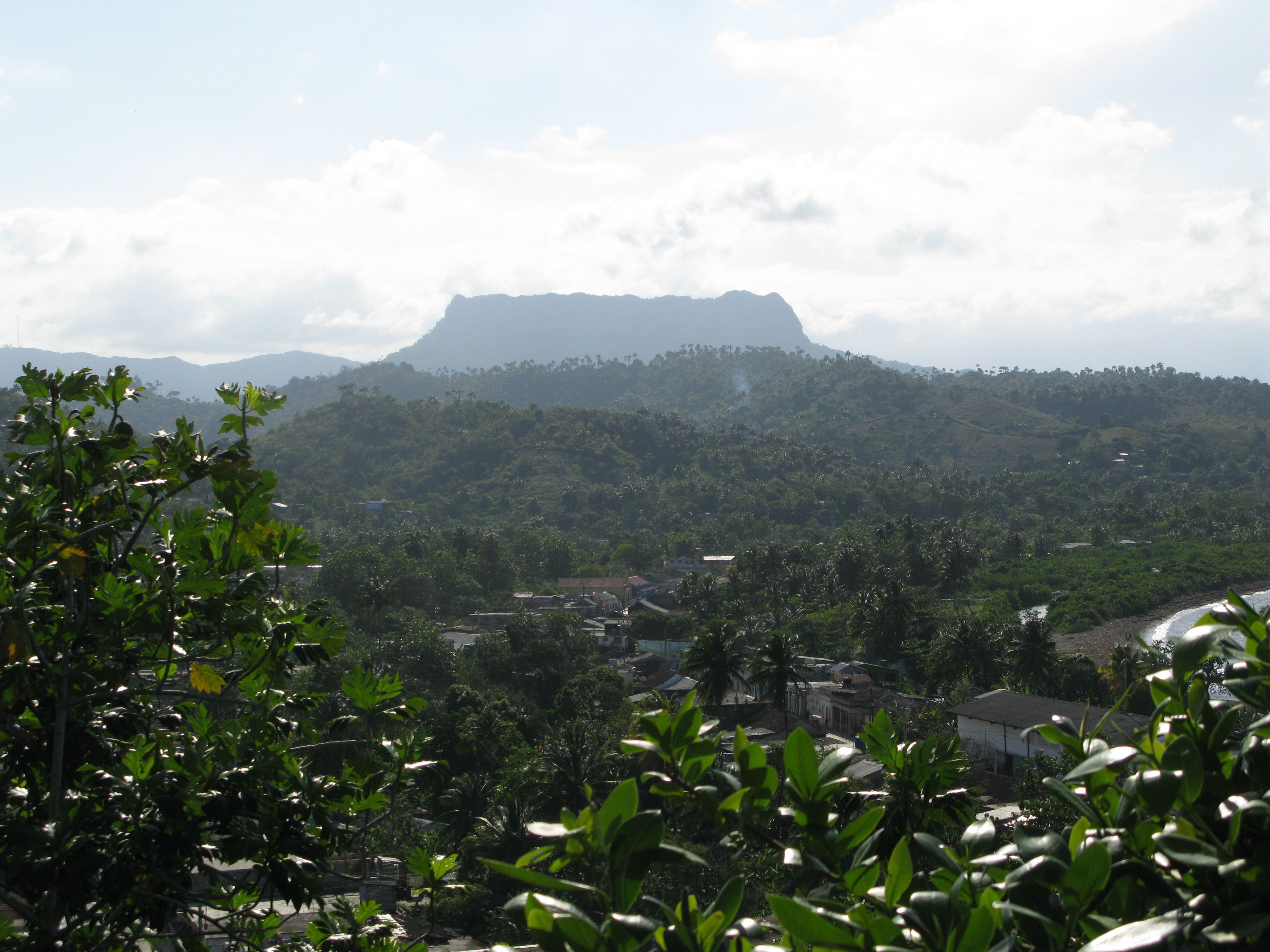
Shielded by heavy mountains on one side and the Atlantic ocean on the other, Baracoa has historically been isolated from the rest of Cuba; until the 1960s, it could only be accessed by sea. This isolation has contributed to much of Baracoa's distinct identity from the rest of Cuba.
History It is believed that Baracoa is where Columbus first landed on American soil, making it truly the first city of the modern Americas. Baracoa was formally established as the first of Diego Velazquez' villas in 1511, and was Cuba's capital until 1515, when the capital was moved to Santiago in part due to Baracoa's remoteness. In the coming centuries, Baracoa, simultaneously close and remote from the rest of Cuba, thrived off piracy and developed a culture distinct from the rest of the island. French settlers fleeing the revolution in nearby Haiti found the climate ideal for growing cacao, and the city transitioned to an agricultural center. In the lead-up to the 1959 revolution, the citizens of Baracoa were particularly supportive and helpful (as was generally true of Eastern Cuba), and were rewarded by the completion of a road from Guantánamo and the end of more than 4 centuries of isolation. Today Baracoa is chiefly a major agricultural zone for Cuba, with all of Cuba's chocolate coming from the surrounding area, and is a major destination on the Cuban tourist trail.
Culture Baracoa's culture has more visible indigenous roots than most of the rest of the Cuba, and many major archeological finds have been made here. The local hero is Hatuey, who famously resisted the Spanish, and local art has a distinctive indigenous inflection to it. The cuisine is also different from the rest of Cuba and the overall lifestyle is more relaxed.
Climate Baracoa and the surrounding areas has a tropical rainforest microclimate, which allows chocolate to grow very well. Expect a fair bit of rain, although it's generally not unpleasant. Baracoa can be surprisingly cool, though most of the surr
如何抵達
Although no longer reachable only by boat, Baracoa remains pretty isolated. Baracoa is accessible from Guantanamo City via La Farola (the lighthouse), a mountain pass road built in the 1960s to reward the Baracoans for their support of the revolution. Note that transportation in and out of Baracoa on both the plane and bus is frequently fully-booked during high season. So, make sure to buy your tickets early enough, especially when leaving, since there are not many alternatives. In low season, however, the Viazul bus might run with less than 10 people.
By bus A daily Viazul (prices & times see link) bus runs between Santiago and Baracoa via Guantanamo City, taking about 5 hr. The 1 bus terminal is located at the northern tip of Baracoa city. The bus ride is one of the more beautiful in Cuba, going from semi-arid desert out of Guantanamo to impressive mountains on La Farola to rain-forest lowlands approaching Baracoa. Also Astro, the national bus line, serves Baracoa from the same bus terminal as Viazul, but as a tourist you are highly unlikely to be allowed on, and if you are (usually by being a student), you're not likely to get a seat. Furthermore, there are local provincial buses and passenger trucks from a separate terminal within the center of the city (ask a Cuban). The latter also connects to Moa with at least one (packed) bus a day (CUC1-2) in each direction, which can easily take up to 3 hr. Either way, you can try stopping both (Astro and provincial ones) at the exit of the city, depending on where you want to go. Of course, this being Cuba, the usual array of chartered buses also serve Baracoa.
By plane Both Cubana and Aerogaviota operate flights from Havana to Baracoa. See Cubajet to book these flights.
By car It's also possible to drive La Farola in a rental vehicle or a taxi, though this is not particularly recommended as, asides from the difficulty and expense of getting a rental car in Cuba, most of the road, especially the mountainous sect
當地交通
Baracoa is a tiny and very compact town, as such walking will be the primary form of transportation in-town. For excursions further afield, a taxi, a bici-taxi or horse-drawn vehicles are handy. Bici-taxis are everywhere and can be paid for in CUC or CUP. Regular taxis are less common but can be hired if necessary.
By hired driver Bici-taxis are available for rent for approximately CUC5/day. Alternatively, you can hire a car (with driver) for about CUC20.
By moped Mopeds and scooters can be rented from a rental agency just off the main park (Parque Centro). It is located inside a cafeteria next to the cinema. Expect to pay approximately CUC25 for a full day.
By bicycle Baracoa Bike Rental, Calle Juracion #1 (Beside the Matachin Museum), ☏ +53 54070738, [email protected]. Rents late model bicycles. (updated Dec 2016)
By thumb There is a lot of short distance travel in and out of town. For destinations less than 15 km along the main road, try waving at vehicles with people already on its back.
必看景點
1 Parque Independencia (corner of Antonio Maceo and Felix Ruene). Effectively the city's main plaza, Parque Independencia features a fountain, a statue of local hero Hatuey, and Baracoa's original church (closed for renovations as of 2012). Most of the tour operators' offices, including Cubatur's, ring the park, as do the city government offices. Many casas and paladares are nearby. Old Town. Baracoa's old town, which pretty much encompasses the entire city, is not particularly pretty nor does it contain many particularly notable buildings, but it's pleasant to stroll in. 2 Malecòn. Baracoa has its very own Malecòn, running from the northern bus station to Fuerte Matachín, though it has none of the fame (or crowds) of Havana's. It does, however, make for a pleasant stroll along the Atlantic. Near the middle of the walk, a park and statue commemorate Columbus and the Spanish landing on Cuba. Some casas are along the Malecòn, offering great views onto the sea.
3 Castillo de Seboruco (Hotel El Castillo), Hill west of Calixto Garcia, near Mariana Grajales. The highest fort in Baracoa, dating to 1739, is now a hotel, but non-guests are free to wander the outdoor (and some indoor) areas and admire the views. Asiento Taino, Moncada beyond Hotel El Castillo. A reconstructed Taino burial ground full of statuettes. While the museum is fascinating, one does end up wondering how heavy-handed the reconstruction was. On the way there, watch for the dilapidated old gas station on Moncada – it's an impressive sight. CUC3. 4 Hotel La Rusa, 161 Máximo Gomex. More a historical oddity than a great place to spend the night, this hotel along the malecón was run by a Russian woman who escaped to Cuba from the Russian Revolution – only to become one of Castro's closer confidantes. 5 Fuerte Matachín, Corner of José Martí and Malecón. At the southern end of the Malecòn this former Spanish fort now serves as the city's municipal museum. It's quite informat
城市概覽改寫自 Wikipedia,旅遊指南來自Wikivoyage (CC BY-SA)。照片來自 Wikimedia Commons.