
Asakusa
Japan · Asia
關於Asakusa
Asakusa (浅草) is a part of Tokyo's downtown Taito district, best known for its many temples, particularly Sensō-ji, Tokyo's largest Buddhist temple.
Asakusa旅遊指南
城市概覽
Sensoji temple has been here since 645, but Asakusa only became a major entertainment district during the Edo period when the officials managing the rice warehouses in nearby Kuramae started coming here to party. The area's golden age was during the Meiji and Taisho periods, when it boasted Tokyo's first Western bar (Kamiya Bar, see #Drink), its first amusement park (Hanayashiki, see #Do), countless theatres, and the gangsters, prostitutes and other colorful characters that came with the territory. However, it was bombed flat during World War II and despite being rebuilt never quite recovered, with the action moving west to Shinjuku, Roppongi, etc. Today's Asakusa is Tokyo's tourist epicenter, with lots of affordable accommodation, easy direct access to both Haneda and Narita airports, and plenty of businesses catering to visitors. You'll see lots of tourists being carted around the streets in rickshaws or walking the streets dolled up in kimonos and geisha makeup, and the crowds around Sensoji in particular can be immense, but quiet residential neighborhoods with little restaurants and local temples are only a block or two away from the beaten path.
如何抵達
By plane There are direct through train services from both Haneda Airport (40 min) and Narita Airport (1 hr) to Asakusa subway station on the Toei Asakusa Line. From Narita it's around 15 min faster to take the Skyliner express via Ueno, but this costs more and requires a subway transfer. Alternatively, the Airport Limousine bus service runs every day from Narita Airport to Asakusa for ¥3,100. It arrives at Asakusa View Hotel, right next to Asakusa Station. A direct taxi from Haneda to Asakusa will run you around ¥9,000 including expressway tolls.
By train Asakusa is the terminus of the Metro Ginza line (G19), which is the best way to get into the area, perhaps by connecting from the Yamanote line at Ueno. Other options are to take the eponymous Toei Asakusa line (A18), which carves a path through eastern and southern Tokyo, or by taking the Toei Oedo Line to the Kuramae Station (E11), or by using the Tobu Skytree Line. Asakusa is also the terminus of the Tobu Nikko line, offering direct access to the shrines and national parls of Nikko, 2 hours away. Cruises down the Sumida River (Sumida-gawa) depart from a wharf only a 5-minute walk from the temple, by the Azuma-bashi bridge. There are a number of boat routes available, so have a look at the map and choose one. The largest operator is Suijo Bus.
必看景點
Sensō-ji
Sensō-ji (浅草寺), also known as Asakusa Kannon, is Tokyo's largest Buddhist temple and a major attraction for Japanese and foreigners alike. Destroyed in World War 2, the main buildings and gates were rebuilt between 1951 and 1973. Take the Asakusa exit of the subway and follow the crowds.
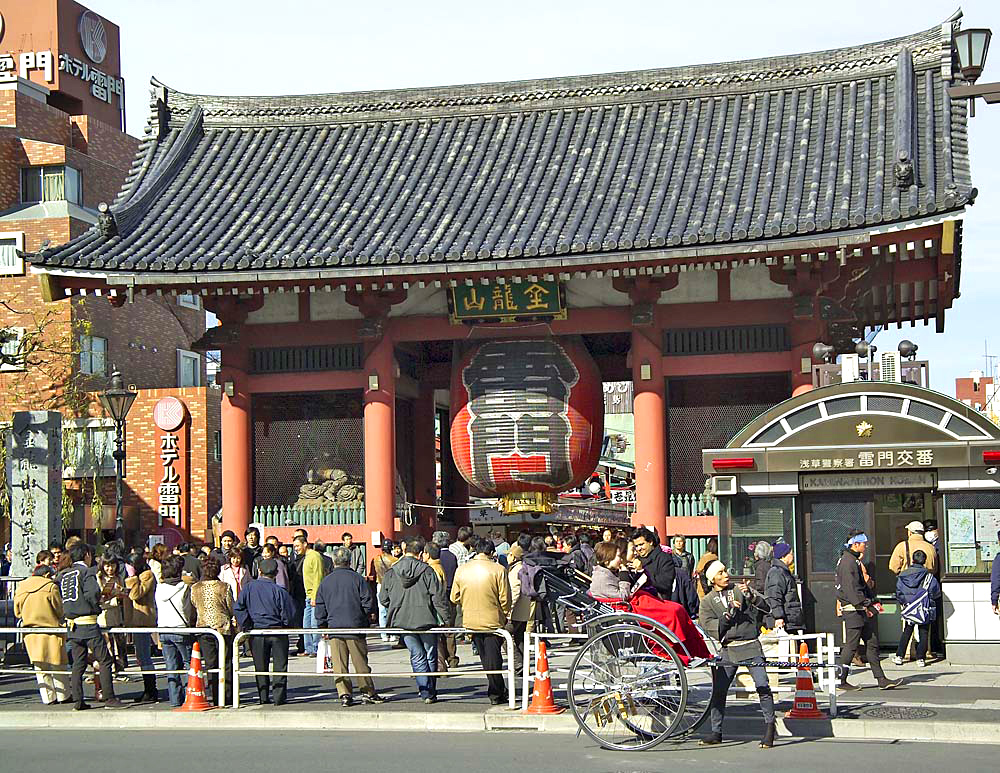
1 Kaminarimon (雷門, Thunder Gate). Up first, it features a much-photographed giant lantern and statues of guardian gods Raijin (god of thunder) and Fūjin (god of wind). First built in 942, the gate has been destroyed numerous times and the current incarnation dates to 1960. The Nakamise shopping arcade leading up to the temple starts after the gate (see Buy). 2 Hōzōmon (宝蔵門). At the end of the arcade, it is the main gate, notable for a giant straw sandal (waraji) hung up on one side. This gate too is guarded by ferocious guardian gods. Rebuilt 1964. 3 Kannondō (観音堂, Kannon Hall). Behind the gate, the main hall of the temple is perennially busy with a steady stream of worshippers wafting incense over themselves and trooping up the steps to pray and donate. According to legend, the hall was first built in 628 to house a statue of Kannon, the Goddess of Mercy, fished out of the Sumida River by two brothers. Rebuilt 1951–58. 4 Gojūnotō (五重塔, 5-Story Pagoda) (to the west). It reputedly contains some of the ashes of the Buddha. Rebuilt 1973.
Other temples and shrines 5 Asakusa Jinja (浅草神社). To the east behind the temple is this Shinto shrine devoted to protecting the Buddhist temple in a typically Japanese arrangement. The fairly plain shrine is not much to look at, but is notable as the focal point of the Sanja Matsuri festival (see Do). 6 Chingodō Shrine (鎮護堂). If you turn left before the Hōzōmon gate and head west for a few hundred meters, this quiet shrine is on your left. The shrine is dedicated to the Japanese raccoon god tanuki, notably primarily for its big flask of sake and gigantic testicles (at least when depicted as a statue). 7 Dembō-in Temple (伝法院). This
體驗活動
Sanja Matsuri (三社祭). Organized at Asakusa Jinja yearly on the third weekend in May, this is Tokyo's largest festival (matsuri) and attracts up to 2 million spectators. The main event is a procession known as Daigyōretsu, when traditional performers and musicians parade through the streets, while on the next two days portable shrines (mikoshi) are carried to and from the temple for purification. Asakusa Samba Carnival. Held on the last Saturday of August. The street parade, which features thousands of participants from all over Japan, is held in the afternoon around Sensō-ji, and there are some stage shows in the evening. The event started in 1981, it's the biggest party of the year for the many Japanese-Brazilian residents of Tokyo. 1 Hanayashiki (花やしき). The oldest amusement park in Japan. Next to the Sensō-ji temple grounds is this small and somewhat lackluster carnival complex with rides, booths, and games. The neighborhood theatre specializes in showing classic Japanese films, as many of the tourists are elderly Japanese.
購物
1 Nakamise (仲見世). This busy covered shopping arcade leads from the Kaminarimon gate to the temple, selling all sorts of Buddhist paraphernalia as well as assorted tourist kitsch. This is one of the best places in Tokyo to buy souvenirs (the other being the Oriental Bazaar in Omotesando), but more expensive items such as swords and kimono are likely to be of inferior quality. Slightly nicer crafts, rather than mass-produced kitsch, can be found at good prices if you walk up to the temple, turn right, and turn right again on the first small street running parallel to Nakamise. You will see plenty of small shops in this general area which have better quality souvenirs and gifts, like handkerchiefs, strings of hand-made silk balls, and hairclips.
美食
Asakusa is famous for its senbei rice crackers, grilled on the spot, flavored with soy and usually wrapped in seaweed. There are many competing shops in the Nakamise arcade, and packages of senbei are a very popular souvenir among the Japanese as well. Kaminari okoshi, a sweet snack made of rice, peanuts, and syrup, originated from food stalls near Kaminarimon in the Edo period. Asakusa is also famous for its tempura, fried prawns and vegetables. You can find many tempura restaurants (high and low budget) in the streets near Nakamise-dori Street.
Budget 1 Kagetsudo (花月堂), Asakusa 1-18-11, ☏ +81 3-5830-3534. Daily 09:00-17:00. This place has been making "melon pan" since 1945, and they haven't
城市概覽改寫自 Wikipedia,旅遊指南來自Wikivoyage (CC BY-SA)。照片來自 Wikimedia Commons.