
Altai Tavan Bogd National Park
Mongolia · Asia
關於Altai Tavan Bogd National Park
Altai Tavan Bogd National Park (Mongolian: Алтай Таван богд байгалийн цогцолбор газар) is located on the westernmost point of Mongolia in Bayan-Ulgii Province. This vast mountainous park borders China and Russia with views of Kazakhstan from the highest peak in Mongolia.
Altai Tavan Bogd National Park旅遊指南
城市概覽
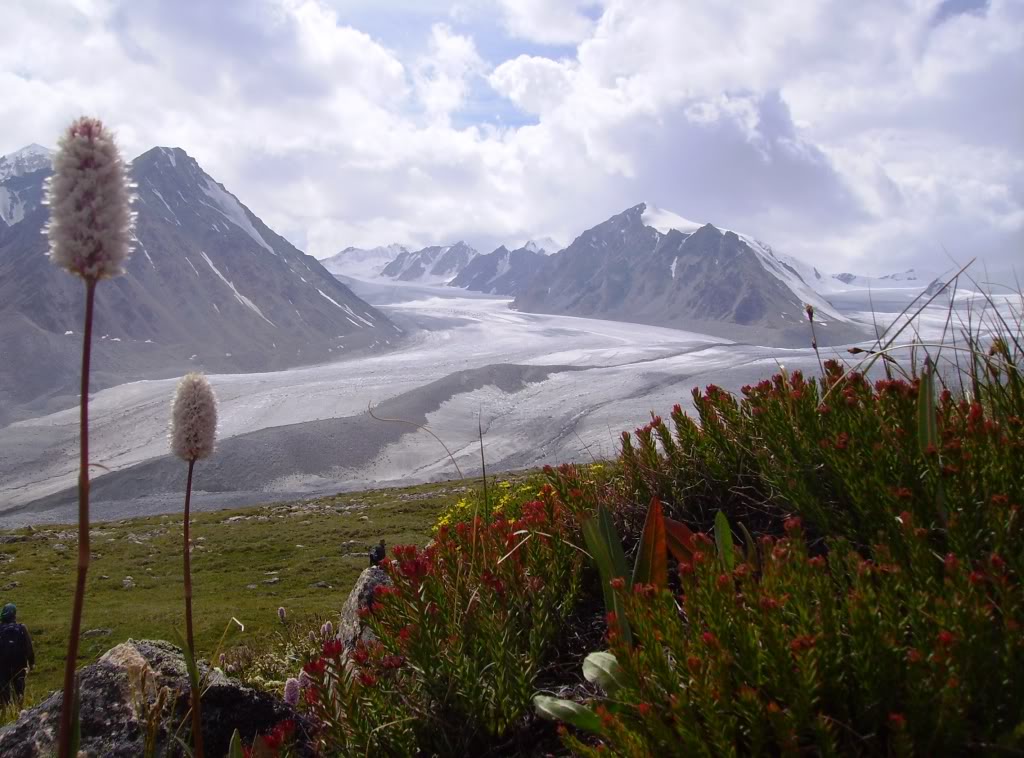
The snow-capped Kuiten Uul mountain, 4374 m (14,201 ft), is the highest of the five peaks of Tavan Bogd Mountains (literally '5 Saints') that gives the park its name. It covers an area of 630,000 ha and is home to three large freshwater lakes and 34 glaciers, plus several waterfalls. The largest, Potanin Glacier, covers 23 km2. Tavan Bogd Mountains are considered sacred to local Kazakhs, Tuvans, and Mongolians. The park stretches from Russia along the Chinese border, following the Altai Mountain Range that divides China, Russia, Mongolia, and Kazakhstan, for over 200 km. Ancient tribes have left many artifacts, using the region for religious ceremonies. Today, tens of thousands of petroglyphs in the park are part of a World Heritage Site. In addition there are numerous Turkic Stone Men and stone burial mounds. The busy season is from June to October when temperatures are warmer, snow has melted, and tour camps and shuttles are operating. The busiest time is August and September when the weather is best for mountain climbing. Also around the eagle festivals when tourist add a trip to the countryside. Though the park is still accessible year round with activities like snow skiing and eagle hunting during the cold winter months.
History The Altai Mountains have been inhabited for around 12,000 years. The oldest images in the park are from 11,000 to 6,000 BC with hunting large mammals and ancient cultures. Thousands of years of petroglyphs show the transition from hunter-gatherer to pastoralism and later to the current semi-nomadic that developed over the last 3,000 to 4,000 years. Around 4,000 years ago, the use of horses and domestication of animals led to the rise of the Blue Turks (whose language is the root of Kazakh and Turkish). These successful warriors left upright carved stone statues known as Turkic Stone Men spread over the Altai Mountains. Later in 700 BC, a group of horse-riding warrior nomads known as the Scythians starting from the Altai Mountains to
如何抵達
Altai Tavan Bogd is 180 km from the provincial capital of Ölgii. You will have to start in the city unless you are going with a tour operator that gets the permits in advance. It will take 7 hours with stops (5 hours non-stop) due to the rough, non-existent roads, high mountain passes, and lack of bridges, though a very scenic drive. Most visitors to the park go as part of a tour group or with a guide, though plenty go without one. A trip to the park should be at least 5 days, 7 to visit the mountains and glacier.
By car You can hire a Russian jeep or microbus and driver to reach the park from Ölgii, where the National Park Headquarters is located. Usually drivers gather at the Bazaar to find customers, just look for a jeep with "Tourist" posted on the window. Tour guides, hotels, and the Visitor Center can help you with arranging a ride, and get cheaper rates and better drivers (some drivers will drink vodka on the trip). If driving there yourself, ask a guide to draw you a route as paths will change and some rivers are passable only part of the year.
By shuttle Two tour companies offer shuttle services to either the Tavan Bogd North Ranger Station, which is 20 km from the Tavan Bogd Mountains Base Camp, or the Syrgil Rangers Station between the 2 lakes. These are offered during the busy season from June to October.
Kazakh Tour has shuttles to the both sides of the park each Sunday, the Tavan Bogd Mountains North Ranger Station (the northern of the 2 valleys leading to the mountain) and the bridge between Khoton and Khurgan Lakes (hiking or horse ride between these two places is a popular trek). The van is US$214 divided between passengers (up to 8). Shuttle begins on June 22. Western Mongolia Tour (Baldyrgan's Travel Agency), 12-06-18 (Contact through mobile number or Whatsapp and driver will meet you or pick you up.), ☏ +976 8555 0666, [email protected]. Open 24/7. Manages private transport to Altai Tavan Bogd National Park and can also manage natio
必看景點
Spectacular scenery, countless archeological sites, and nomadic families sharing the same space means that there is much to see in all areas of the park. From the Tavan Bogd Mountains, that give the park its name, to the large glacial lakes to the south, each area of the park has a unique appeal including 3 areas comprising a UNESCO World Heritage Site. Throughout the park are foxes, wolves, eagles, falcons, and more common animals. The more endangered animals are found only in small pockets of the park. 1 Tavan Bogd Mountain (At the point where China, Russia, and Mongolia meet, about 20 km west of the ranger station.). The mountains present a stunning view, with a 2,000-m massif and snow covered peaks. Below the peak is the 23-km² Potuniin Glacier and many more smaller glaciers and peaks. The Tavan Bogd Base Camp at the base of Potanin Glacier is occupied most of the summer with tourists and guides. Not many people live in close vicinity of the mountains, though they do live in the valleys leading to the mountains such as Tsagaan Gol. Near the ranger stations in nearby Tsagaan Gol and Tsagaan Salaa will be local families with horses to rent. (updated Nov 2019) 2 Lakes Region (South of the Tavan Bogd Mts, near the Chinese border, head south from Tsengel village along the Hovd River). The twin lakes of Khoton Nuur and Khurgan Nuur and nearby Dayan Nuur has most of the people and archeology of the park, as well as the greenest scenery. Kazakh nomads live on the shores of the lakes during the summer. Many of these families hunt with eagles during the winter, and enjoy showing off their eagles to friends and tourists during the summer. Plenty of evidence of past civilizations can also be seen near the lakes with Turkic Stone Men, petroglyphs, and large stone burial mounds called khirigsuur. To the south of the lakes is forests with bears and red deer. Southwest of the lakes, two of the streams have waterfalls of 7 to 10 m in height. Khoton Nuur and Khurgan Nuur are conn
體驗活動
There are plenty of reasons why Tavan Bogd is the most visited National Park in western Mongolia. The park has many different activities that allow for an exciting and varied travel experience within the park. Most people trek between the lakes and the mountains, climb the shortest of the 5 Saints, and visit local nomadic Kazakh and Tuvan families. More adventurous tourists will climb the highest of the mountains, raft down the river, and skiing down the mountains.
Cultural experiences Visiting nomadic families inside the part is an obligatory part of any visit to the park and is possible both summer and winter. Even if you have visited families elsewhere in Mongolia, it is worth seeing Kazakh and Tuvan families. You can stop by for milky tea or a meal while on a trek, or stay the night. Some of the Kazakhs are eagle hunters, and you can ask to hold the eagles or watch their training during the summer months. Or you can watch the daily routine of a real nomad of herding animals, mi
城市概覽改寫自 Wikipedia,旅遊指南來自Wikivoyage (CC BY-SA)。照片來自 Wikimedia Commons.