
Alerce Andino National Park
Chile · Americas
關於Alerce Andino National Park
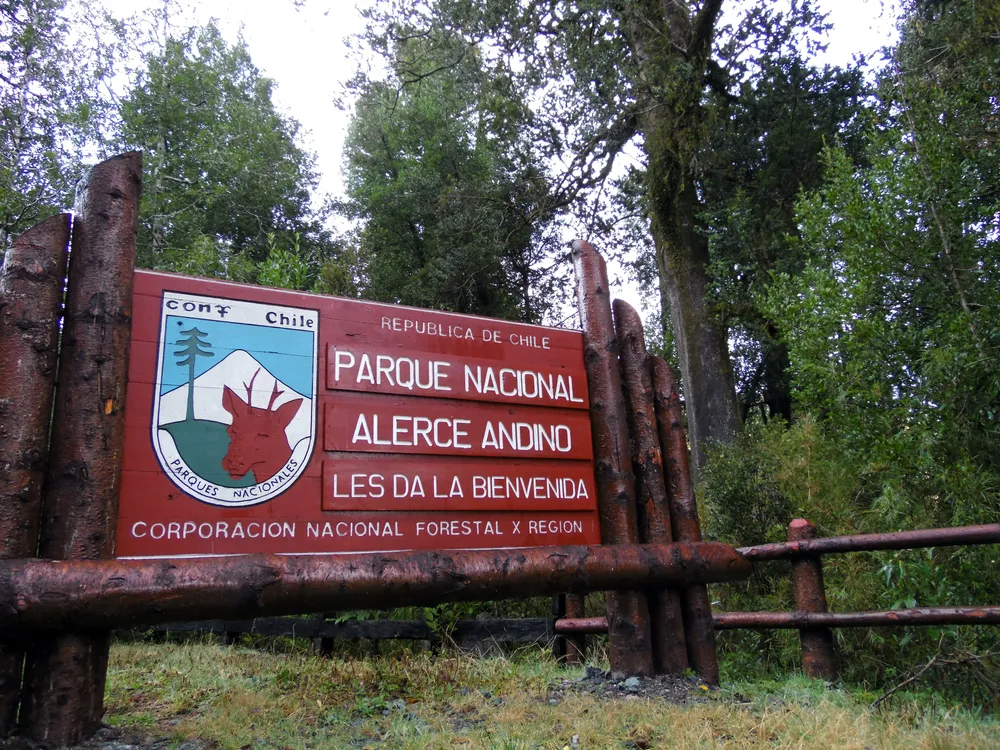
Alerce Andino National Park (Parque Nacional Alerce Andino) is a protected natural area consisting of highland lakes and streams in the Andes mountains of Chile. The park is home to more than 50 lakes and is the northernmost point of Chile's Route of Parks trail.
Alerce Andino National Park旅遊指南
城市概覽
The park covers an area of 39,300 hectares. It is administered for the federal government by Corporacion Nacional Forestal, CONAF.
History The park was declared part of the Chilean national parks system in November 1982.
Landscape
The park is dominated by forested mountains with many streams, rivers, and lakes. The park is particularly known for its picturesque highland lakes and for its towering Cypress forests. There are also waterfalls, cliffs, ravines, and deep caves.
Flora and fauna The park is known for its forests of Patagonian Cypress trees, known as alerce (Fitzroya cupressoides). The alerce forests are sometimes compared to the redwood forests of California because they are very old (estimated to be 1,000 years or even older) and grow extremely high (60 meters). Because the tree is naturally disease and insect resistant, it was harvested extensively up until the 1970s, when the Chilean government stepped in and banned its harvest. Stands of alerce can be found in several parks in Southern Chile, but Alerce Andino National Park has the most extensive coverage with almost half its area covered in alerce forest.
Quite a few mammal species are found in the park including large predators like the puma, small animals like the colocolo possum (whose nearest relatives are Australian marsupials). There are smaller felines and canids, like the grey fox and a large population of bats. Birdwatchers will find a wide variety of avians to observe with the lakes and ponds being particularly attractive to our feathered friends. Swans, including black-necked and coscoroba swans can be found floating on the park's many lakes, ponds, and lagoons.
Climate Temperatures are mild with relatively cool days and nights that can get near freezing. The park receives large rainfalls and is wet nearly all year with total rainfalls averaging about 4,000 millimeters annually (so bring wet weather gear and expect muddy trails).
如何抵達
There are two entrances to the park: Chaica and Sargazo
當地交通
Most of the park is accessible only via hiking trails, which vary in length and difficulty.
必看景點
Waterfalls:
Salto Río Chaicas Lakes:
Laguna Sargazo Laguna Frio Laguna Chaiquenes and Laguna Triángulo
住宿
Lodging
Camping A basic campground is available in the Sargazo Sector, near the northern entrance. The campground has marked sites with minimal amenities, though some sites have picnic tables and fire pits. Pit toilet restrooms are available. The park has a restricted use campground called El Chucao in the Chaica Sector. Sites in this area are reserved for use by hikers.
Backcountry Backcountry camping is allowed in some designated areas of the park. Inquire with the park rangers when entering the park.
城市概覽改寫自 Wikipedia,旅遊指南來自Wikivoyage (CC BY-SA)。照片來自 Wikimedia Commons.