
Potala Palace
Tibet · Other
關於
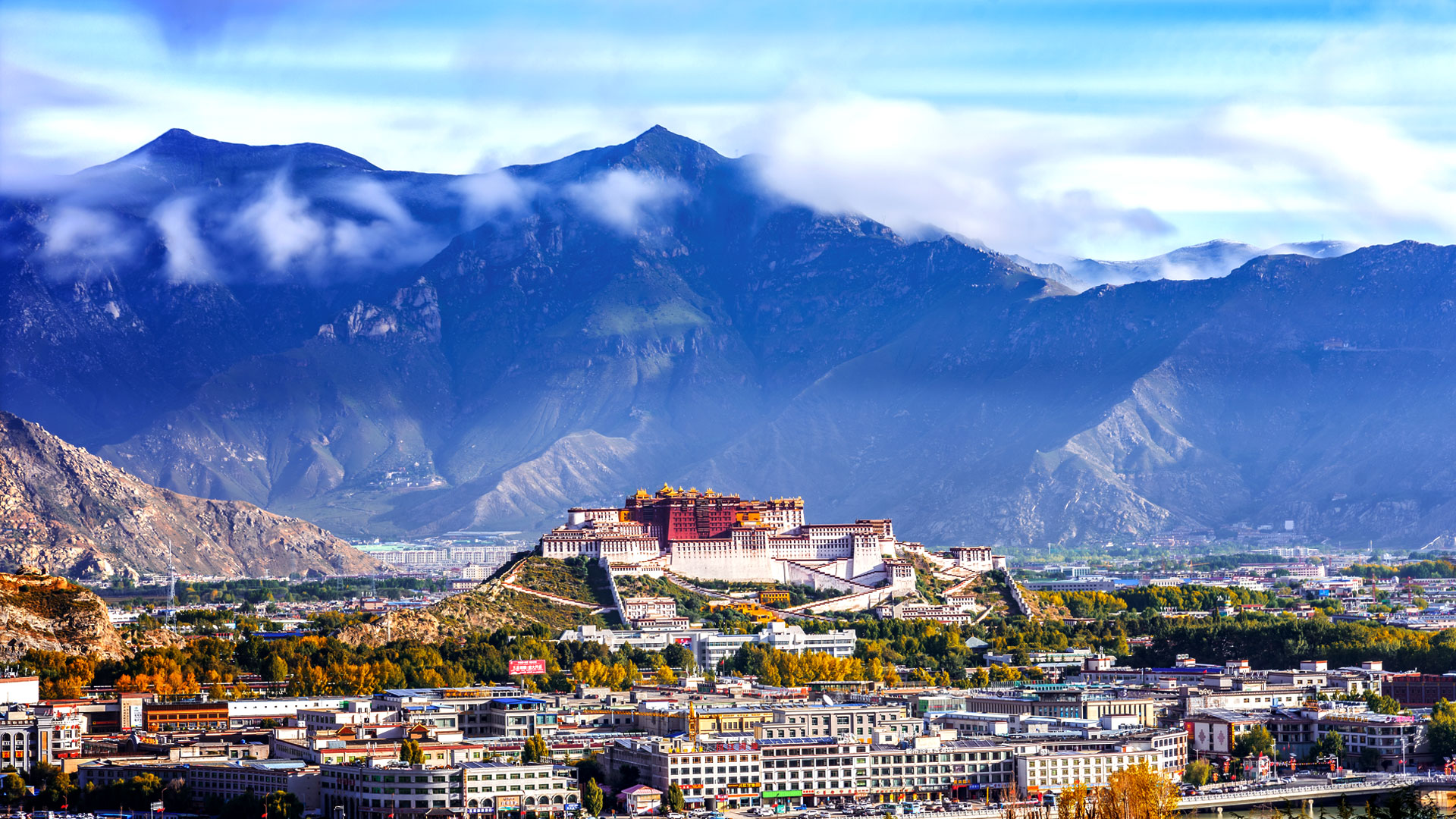
Potala Palace (Tibetan: ཕོ་བྲང་པོ་ཏ་ལ་, Wylie: pho brang po ta la; simplified Chinese: 布达拉宫; traditional Chinese: 布達拉宮; pinyin: Bùdálā Gōng) is a museum complex in Lhasa, the capital of the Tibet Autonomous Region of China. It was formerly the winter palace of the Dalai Lamas, built in the dzong style on Marpo Ri (Red Mountain). From 1649 until 1959 it served as the Dalai Lamas' residence, after which it became chiefly a museum following the annexation of Tibet by the People's Republic of China.
The palace is named after Mount Potalaka, regarded in Buddhist tradition as the mythical abode of the bodhisattva Avalokiteśvara. Construction of the present structure was begun in 1645 at the order of the 5th Dalai Lama, advised by Konchog Chophel, the Thirty-fifth Ganden Tripa of the Gelug school. It was built on the site of an earlier palace attributed to Songtsen Gampo (traditionally dated to 637).
Built at an altitude of about 3,700 metres (12,100 ft) on Marpo Ri in the center of the Lhasa Valley, the palace measures 400 metres (1,300 ft) east–west and 350 metres (1,150 ft) north–south. Its sloping stone walls average 3 metres (9.8 ft) thick, 5 metres (16 ft) at the base, with copper poured into the foundations for earthquake protection. Rising 13 stories, the complex contains more than 1,000 rooms, 10,000 shrines, and some 200,000 statues, reaching a height of 119 metres (390 ft) above the mountain and over 300 metres (980 ft) above the valley floor.
內容改寫自 Wikipedia (CC BY-SA)。照片來自 Wikimedia Commons.