
Garhwa Fort
India · Asia
關於
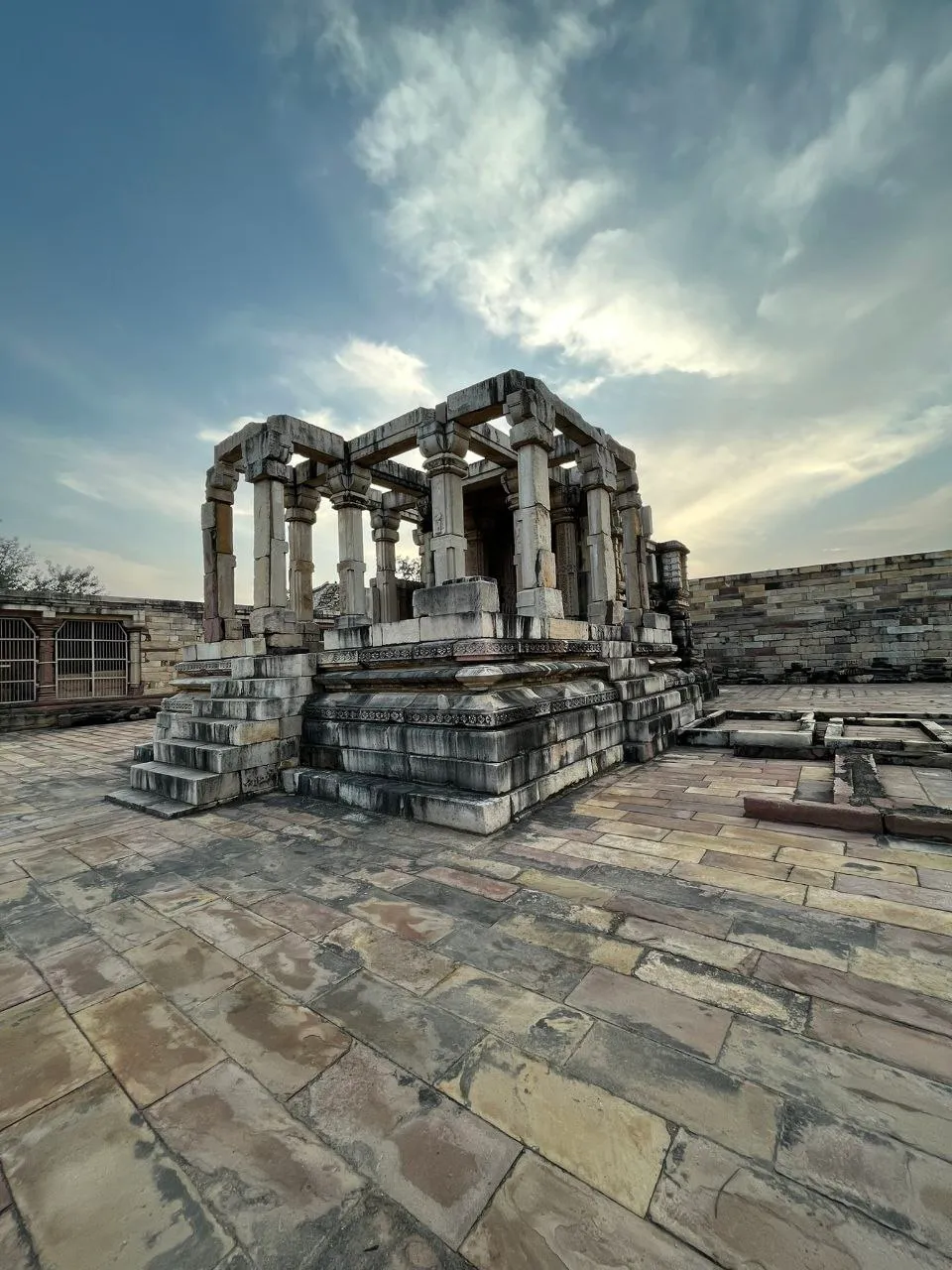
Garhwa fort is a medieval fortified enclosure, housing a temple complex in Prayagraj district, Uttar Pradesh, India, belonging to the Gupta Period. It is most known for its Gadhwa Stone Inscriptions early 5th-century CE Sanskrit inscriptions by Chandragupta II and Kumaragupta. The fort is situated 50 km south-west of Prayagraj, on the Jabalpur road, 5 km from Shankargarh.
The ancient name of Garhwa was Bhattpraya; in fact, there is a village called Bhattgarh nearby, which is currently named Bargarh. The ruins of the temple were fortified in the 1750 by Vishwanath Singh Deo, a Baghelkhand ruler belonging to Rewa princely state. The fortification consisted of a square enclosure and parapets, giving a fortress kind of look. There are also two bawli (stepwell) in the complex. The temple has many relics belonging to the Gupta period, which date back to as far as the 5th and 6th centuries. The most notable item in the fort is a carved slab of stone, 6–7 feet high, representing all Dashavatara (10 avatars) of Lord Vishnu, belonging to the 11th or 12th century.
Only 1 km away from the fort complex lies Bhita, an archeological site dating to Mauryan and Post-Mauryan era (320 BCE - 185 BCE). Here the remains of an ancient Indian town were discovered, complete with extensive housing blocks along several streets, where some houses had up to fifteen rooms arranged around a large open courtyard. This site was first explored by Alexander Cunningham in the 1870s, uncovered a series of 5th-century CE Sanskrit inscriptions of Gupta era, and later by John Marshall. Subsequently, a Mukhalinga, that a Shivlinga with five faces. dating to the 2nd century BCE was also discovered on the site.
內容改寫自 Wikipedia (CC BY-SA)。照片來自 Wikimedia Commons.