
Fort Monroe
United States · Americas
關於
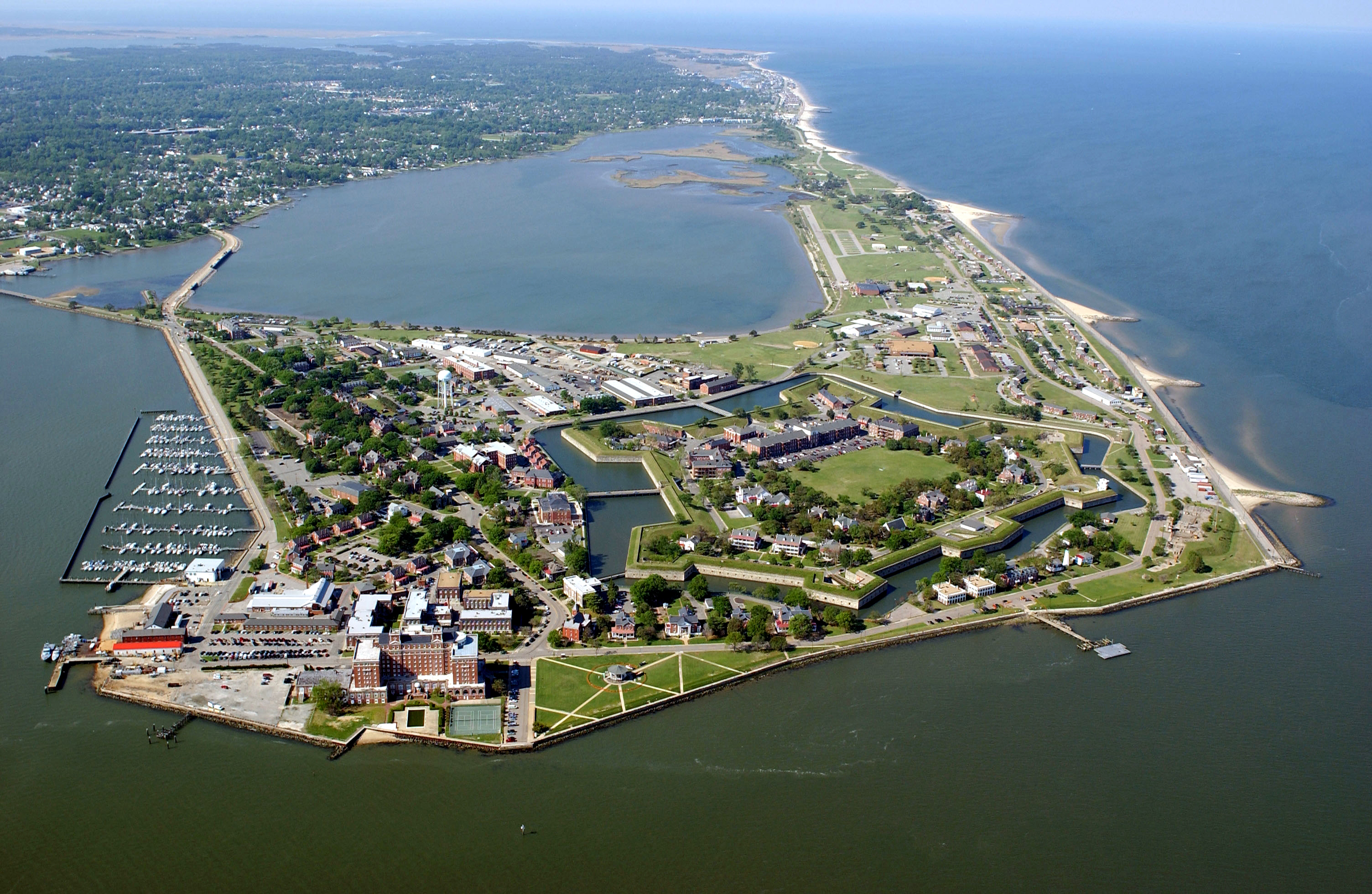
Fort Monroe is a former military installation in Hampton, Virginia, at Old Point Comfort, the southern tip of the Virginia Peninsula, United States. It is currently managed by partnership between the Fort Monroe Authority for the Commonwealth of Virginia, the National Park Service, and the city of Hampton as the Fort Monroe National Monument. Along with Fort Wool, Fort Monroe originally guarded the navigation channel between the Chesapeake Bay and Hampton Roads—the natural roadstead at the confluence of the Elizabeth, the Nansemond and the James rivers.
Until disarmament in 1946, the areas protected by the fort were the entire Chesapeake Bay and Potomac River regions, including the water approaches to the cities of Washington, D.C., and Baltimore, Maryland, along with important shipyards and naval bases in the Hampton Roads area. Surrounded by a moat, the six-sided bastion fort is the largest fort by area ever built in the United States.
During the initial exploration by a mission headed by Captain Christopher Newport in the early 1600s, the earliest days of the Colony of Virginia, the site was identified as a strategic defensive location. Beginning by 1609, defensive fortifications were built at Old Point Comfort during Virginia's first two centuries. The first was a wooden stockade named Fort Algernourne, followed by other small forts. However, the much more substantial facility of stone that became known as Fort Monroe (and adjacent Fort Wool on an artificial island across the channel) were completed in 1834, as part of the third system of U.S. fortifications. The principal fort was named in honor of U.S. president James Monroe.
Although Virginia became part of the Confederate States of America, Fort Monroe remained in Union hands throughout the American Civil War (1861–1865). Union General George B. McClellan landed the Army of the Potomac at the fort during Peninsula campaign of 1862 of that conflict. The fort was notable as a historic and symbolic site of early freedom for former slaves under the provisions of contraband policies.
For two years following the war, the former Confederate president, Jefferson Davis, was imprisoned at the fort. His first months of confinement were spent in a cell of the casemated fort walls that is now part of its Casemate Museum.
內容改寫自 Wikipedia (CC BY-SA)。照片來自 Wikimedia Commons.