
Anchuthengu Fort
India · Asia
關於
The fort was the East India Company's first permanent post on the Malabar Coast. In November 1693, John Brabourne was sent by the British East India Company (EIC) to Attingal, where he obtained from Rani Ashure a grant of a site for a fort on the sandy spit of Anchuthengu (then known as Anjengo), together with the monopoly of the pepper trade of Attingal. The EIC commenced construction in January 1696.
In June 1696 British pirates in the ketch Josiah under Robert Culliford, destroyed the Bengal Pilot Service's sloop Gingali (or Gingalle) at Anjengo.
While construction was ongoing the Dutch lobbied the Rani against the fort's construction, as it would impact adversely on their own trade on the Malabar coast. She ordered Brabourne to stop building but he ignored her orders. The Rani then tried to starve out the British by cutting off supplies; but as they could be supplied from the sea, the land blockade proved ineffectual. She then sent an armed force against Brabourne but he defeated it and a peace was arranged.
The fort was completed in 1699, and a flourishing trade in pepper and cotton cloth speedily grew up. The fort served as the first signaling station for ships arriving from Britain.
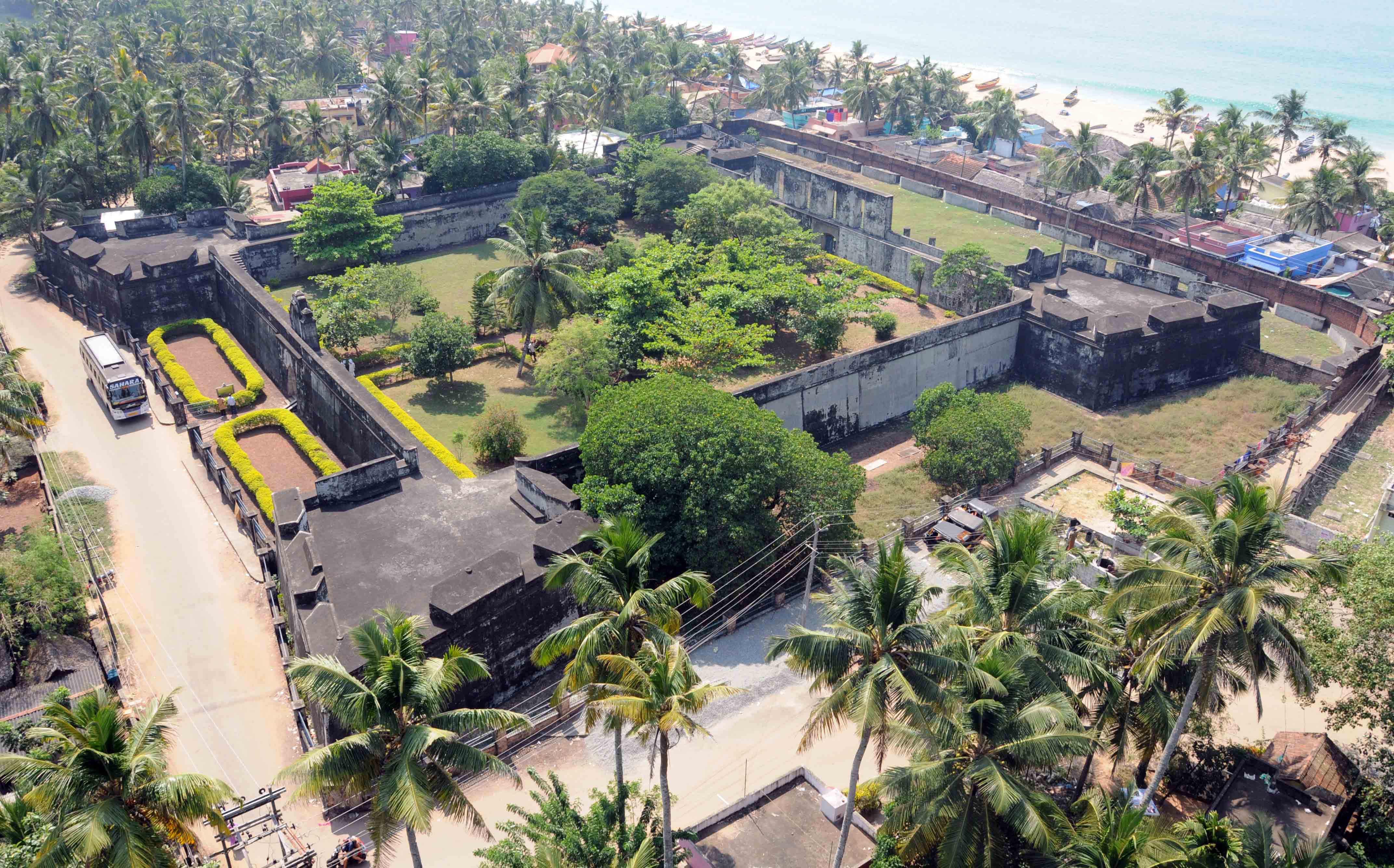
The fort is 256 ft (78.0 m) square, with four bastions, each of which mounted eight 18-pounder guns. The walls between the bastions had seven or eight guns. In addition, there was a battery of some twenty 18&24-pounder guns facing the sea. The fort had a garrison of 400 Europeans and 70-80 topasses. Originally Anjengo was second in importance to the EIC only to Bombay Castle.
內容改寫自 Wikipedia (CC BY-SA)。照片來自 Wikimedia Commons.