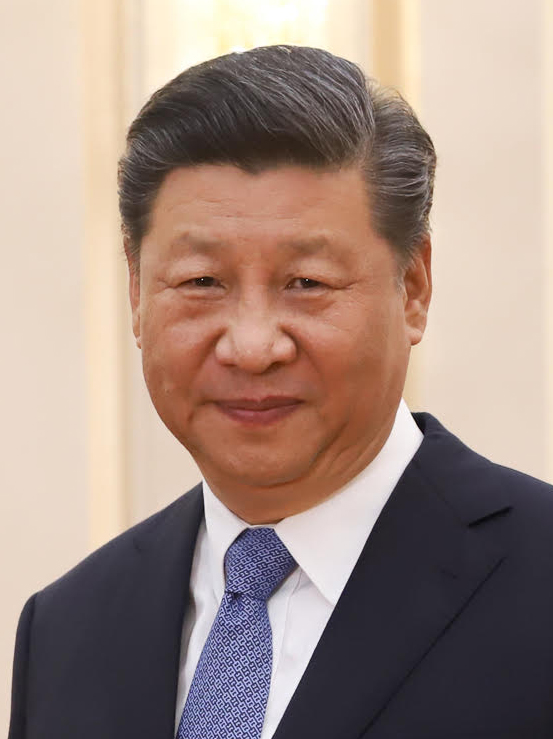
Wang Yi - China's Minister of Foreign Affairs - C: Cancillería del Ecuador
In the last couple of weeks, a strange visit took place in the shadow of the Himalayas.
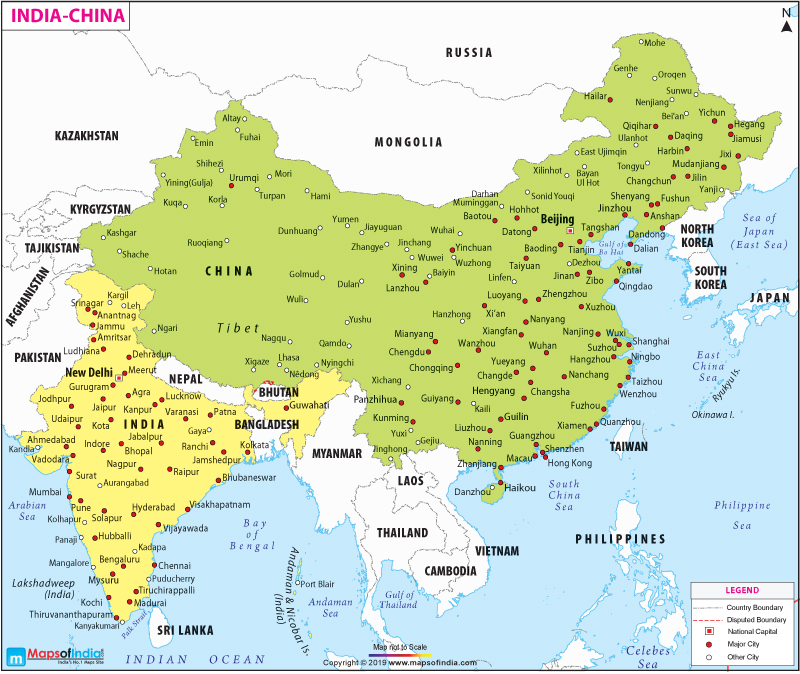
Wang Yi, China’s foreign minister visited Tibet Military District and surrounding areas on August 14th, and met with the top Communist Party official in Tibet, Wu Yingjie, as well as the chairman of the Tibet Autonomous Region (TAR) government, Qizhala.
Before commenting on the nature and implications of the visit besides the optics, it is important to understand briefly the major reasons why politicians visit any province.
Even in China which abhors conventional democratic politics, the mechanics of politics that equate to grabbing, and holding on to power, are the same.
There are three major reasons why a politician may visit an area: if it is a campaign season, a home province or to motivate the local population during times of disaster.
Since terms, like elections are not in the CCP’s playbook, and as Mr Wang Yi is not from Tibet, it has to be assumed that the visit concerns the last reason – motivating the local population in times of disaster.
But a look at Chinese media, says all is well in Tibet.
Plans are afoot to building a high speed rail network from Qinghai in China’s east to Lhasa, and to further extend it to Kathmandu via Shigatse.
Infrastructure development is proceeding apace.
There are no visible signs of protestation.
So why the need for the country’s Foreign Affairs Minister to visit an ‘integral’ province of China?
Is this visit a portent for something more sinister? Does China even consider Tibet and Xinjiang as part of the nation or are they just geographical areas to be exploited?
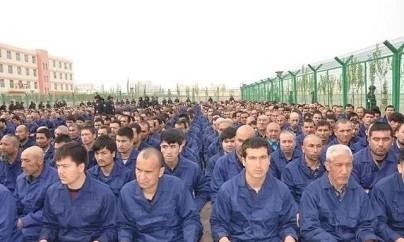
If news reports are to be believed, a smart and almost industrial level genocide is underway in both Tibet and Xinjiang.
Since the term genocide evokes the horrors of the Holocaust, China has been very smart about implementation.
Slowly and steadily, through forced abortions, the implanting of contraceptive devices and migration of the male population to other parts as forced labour, China has ensured a definite demographic change.
This has been supplemented by the influx of a huge number of Han Chinese into both these areas.
However, China has realised that to maintain an aggressive territorial approach and subsequently control over these occupied territories, it requires the man behind the machine to be adept and equally aggressive.
But President Xi Jinping has realised that its soldiers are not all good fighters.
Documented by a number of academics and journalists both within and outside China is the fact that the People’s Liberation Army (PLA), the CCP’s military arm has recognised its weakest link: its troops.
Just like the ‘Made in China’ tag, a PLA soldier is a sorry excuse for a fighter, good for optics but brittle when it comes to showing mettle.
So what has China done?
It has gone to the best source of fighters in the region.
Sobered by the loss of its soldiers during the clashes in Galwan and a little awestruck by the spirit and fighting capabilities of the Indian soldiers, President Xi has approached the Nepalese government to let the PLA recruit the feared Gorkha fighters into its regiments.
Since there is no cultural connection between the Chinese and Nepalese people barring the greed and avarice of a few politicians, it is difficult to understand how this deal will be implemented on ground.
The world’s most populous country with aims of being a global superpower cannot muster enough of its own people to fulfill its strategic aims.
The dilemma in the Chinese mind is clear: its own troops are not capable of fighting and there is huge trust deficit with Tibetans and Uighurs.
One needs soldiers to fight wars, but who will fight for China?
Compare this scenario with that of the current global superpower, the United States.
Will the US employ Jordanian Bedouins or Nepalese Gorkhas or Moroccan Berbers in its forces with their own troops in-tact?
China’s relationship with rest of the world is transactional in nature.
However this transaction takes the form of a negative-sum game where the countries receive nothing in exchange for services and real estate provided to China.
The Nepalese government is currently sleepwalking into a demographic trap where their citizens will be used as cannon fodder in various future conflicts, but still be equated with second class human beings, similar to the Uighurs and Tibetans.
With pay and emoluments of even China’s Han conscripts abysmally low, is it a deal worth even considering?
This piece was submitted by a prominent Indian journalist based in New Delhi
Nepal plunged into a new political phase late Thursday after President Ramchandra Paudel dissolved the…
A 50-year-old Indian-origin motel manager was brutally killed in front of his wife and teenage…
Fresh questions surrounding the health of U.S. President Donald Trump, 79, have emerged after he…
The Israeli government, led by Prime Minister Benjamin Netanyahu, has officially advanced a contentious settlement…
North Korean leader Kim Jong Un has concluded a significant diplomatic visit to Beijing, reinforcing…
The city of Lisbon awoke Thursday to scenes of devastation and grief after the historic…